
Your refrigerator runs but doesn’t cool because something is stopping cold air from reaching your food, even though the compressor itself is still working. The motor hums, the light turns on, the fan might even be spinning, yet the inside stays warm. That’s the confusing part. A refrigerator that’s completely dead is easy to understand. One that’s clearly running and still failing at its one job feels like a mystery.
It isn’t, though. In nearly every case we see across Michigan kitchens, the cause falls into one of a handful of categories: something is blocking airflow inside the box, warm air is sneaking in from outside, or a specific part that moves or senses cold has quietly failed while the rest of the machine carries on as normal. This guide walks through each one, in the order we’d actually check them on a service call, so you can figure out what’s going on before you decide whether to fix it yourself or call someone.
At Motor City Appliance Pros, we get this call constantly, often from someone standing at an open fridge door insisting the thing is definitely running because they can hear it. They’re right, and that’s exactly why it’s worth understanding what running actually tells you, and what it doesn’t.
Running Doesn’t Mean Cooling, and Here’s Why
A refrigerator is really two systems working together. The first is the sealed cooling system, the compressor, condenser coils, and evaporator, which together move heat out of the box. The second is everything that gets cold air where it needs to go once it’s made, fans, vents, dampers, and the door seal that keeps it all in. When people say the fridge is running, they usually mean they can hear the compressor. That tells you the first system is doing something. It tells you nothing about the second.
So a running compressor with a warm interior points you toward one of three things. Either the compressor is running but struggling, working overtime because it can’t shed heat properly, which shows up as constant running with only lukewarm results. Or the compressor is fine, cold air is being made, but it never reaches your food because a fan has failed or a vent is blocked. Or warm air keeps entering faster than the system can remove it, usually through a door that isn’t sealing. Each has a different fix, so the trick is narrowing down which one you’re dealing with.
Start Outside the Box: Coils, Clearance, and the Door Seal
Before opening anything up, check the parts you can reach in five minutes. These cause a surprising share of the calls we get, and they’re the cheapest to fix.
Dirty or Blocked Condenser Coils
The condenser coils are where your fridge dumps the heat it pulls out of the food compartment. On most modern refrigerators they’re underneath the unit, behind a thin grille near the floor. On older models they’re on the back. Either way, they need airflow around them to release heat, and a thick coating of dust, pet hair, or kitchen grease chokes that airflow off. The compressor then has to work much harder to hit the same temperature, and on a bad enough buildup, it simply can’t get there. This is one of the most common causes we find, and it’s also the easiest to fix yourself.
Pull the fridge out, unplug it, and vacuum the coils with a narrow attachment or a coil brush. If you have pets in the house, expect this to make a real difference. It’s worth doing every six months regardless.
Not Enough Clearance Around the Unit
Refrigerators need a couple of inches of breathing room on the sides and back, and manufacturers usually specify this in the manual. Push one flush against a wall or wedge it tightly between cabinets during a kitchen remodel, and the coils can’t dump heat properly no matter how clean they are. This shows up a lot in older Michigan homes with narrower, less flexible kitchen layouts, where a fridge gets squeezed into a spot it wasn’t quite designed for.
A Door That Isn’t Sealing
Run your hand along the rubber gasket around the door. Feel for stiff spots, tears, or a section that doesn’t spring back when you press it. A simple test: close the door on a dollar bill and pull it out. If it slides out with no resistance, the seal isn’t gripping there. A bad seal lets warm, humid air leak in continuously, and the compressor ends up fighting a losing battle, especially in summer. Seals wear out with age and with cleaning products that dry out the rubber, so check the whole perimeter, not just the spot that looks obviously cracked.
Check the Zones Inside the Fridge
If the outside checks out, the next step is looking at how air actually moves inside the cabinet. This is where we find the second biggest group of causes, and it’s often something you did yourself without realizing it mattered.
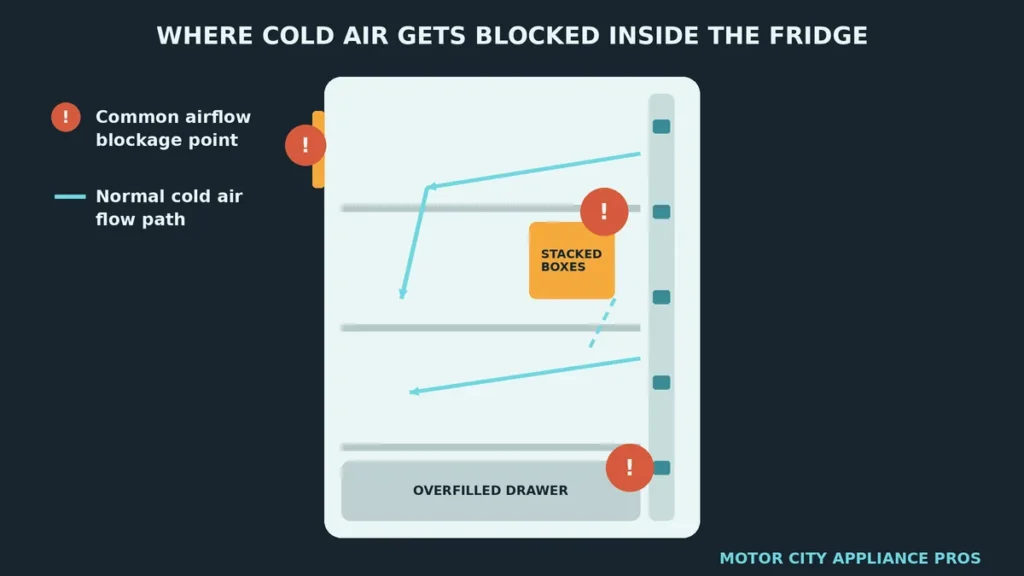
Cold air enters through vents, usually along the back wall, and needs a clear path to circulate around every shelf. Overpack the fridge, especially the back of the top shelf where the main vents usually sit, and you choke that circulation off. A stack of takeout containers or a big holiday dish jammed against the vent can be enough to leave the rest of the fridge running warm while that one spot stays freezing.
The bottom drawers are a common trouble spot too. Crisper drawers often sit right in front of a lower vent, and an overfilled produce drawer blocks it just as effectively as boxes on the top shelf. If your vegetables stay cold but everything on the shelves above runs warm, or the reverse, an airflow blockage is a good first guess.
The fix here costs nothing. Pull everything out, wipe down the shelves, and load things back in with a gap in front of every vent. Leave a little breathing room rather than packing the fridge edge to edge. If you want to check the actual temperature rather than guess, an appliance thermometer left in different zones for a few hours will show you where the cold air isn’t reaching.
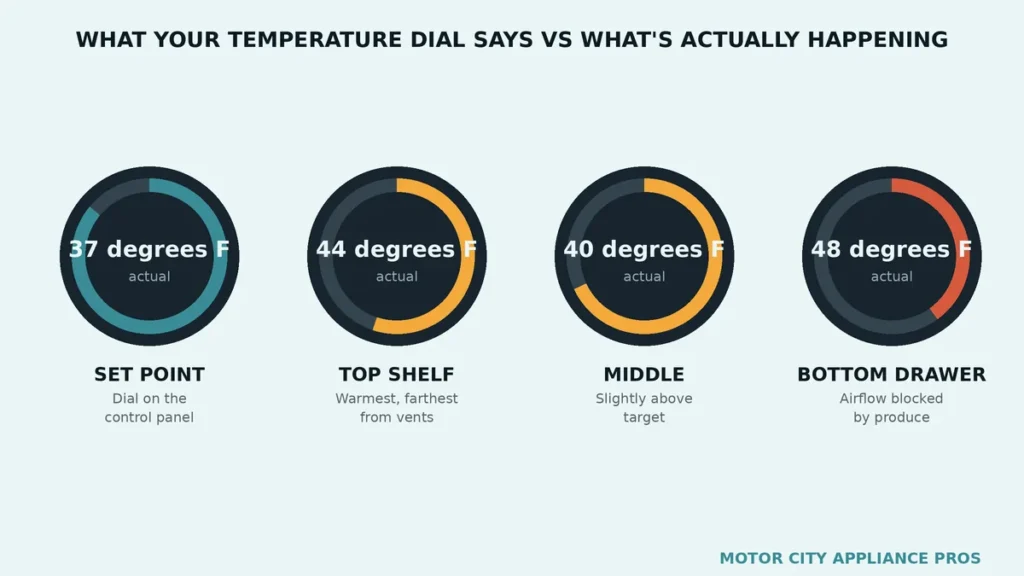
A properly working fridge should hold close to the same temperature throughout, generally around 37 degrees Fahrenheit, with only a couple of degrees of spread between zones. If one area is running ten degrees warmer than the rest, that’s a strong sign of a local blockage rather than a system wide failure, and it’s worth checking before assuming the worst.
When It’s a Part That’s Actually Failed
If the coils are clean, the fridge has clearance, the seal grips, and nothing is blocking the vents, the problem has likely moved from maintenance into repair territory. A few specific parts cause most of these cases.
The Evaporator Fan
This small fan sits behind a panel in the freezer and pushes cold air from the evaporator coils out to the rest of the fridge. When it fails, the evaporator itself can still get cold, sometimes intensely cold, but that cold air has nowhere to go. You’ll often hear a clue before you see one: a grinding, buzzing, or clicking sound coming from the back of the freezer, especially when you open the door and the fan should kick on. If the freezer runs cold while the fresh food section stays warm, this fan is one of the top suspects.
The Condenser Fan
This fan sits near the compressor and pulls air across the condenser coils to help release heat. If it dies, the compressor keeps running, but it’s now trying to cool without proper airflow, similar to a car engine running with a broken radiator fan. You might hear the compressor working harder than normal, or notice the unit feels unusually hot to the touch on the back or underneath.
The Start Relay or Start Capacitor
These small components help the compressor kick on and run smoothly. When one starts to fail, you sometimes hear the compressor attempt to start with a clicking or humming sound, then shut back off without ever running a full cycle. This can look like the fridge is running when it’s actually cycling on and off rapidly without doing real cooling work.
A Faulty Thermostat or Control Board
On newer refrigerators, a temperature sensor and control board decide when the compressor and fans should run. If the sensor reads incorrectly, the system might think the fridge is already cold enough and back off too early, even though the compartment is still warm. This one is trickier to self diagnose, since everything can look and sound normal while the logic behind it is simply wrong.
A Simple Way to Work Through It
The flowchart below is roughly the order we’d check things on a real visit. Start at the top and work down.
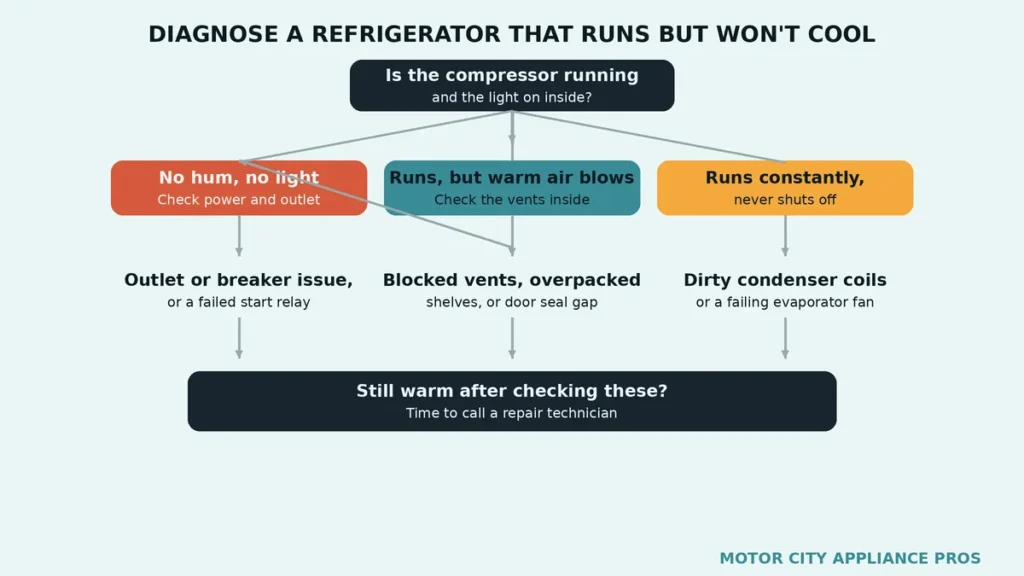
If the compressor never makes a sound and the interior light doesn’t come on, you’re dealing with a power problem rather than a cooling problem. Check that the fridge is plugged in firmly, test the outlet with another device, and check your breaker panel. If the compressor runs and you hear warm air moving or feel it near the door, work through the vent and clearance checks above. If the compressor runs constantly and never seems to catch up, that points toward the coils, the seal, or a struggling fan.
Why This Trips Up Michigan Homes Specifically
A few things about living in Michigan make this problem more common, or at least more noticeable, than it might be elsewhere. Summer humidity puts extra strain on a weak door seal, since warm moist air carries more heat into the box than dry air does, so a seal that was barely getting by in March can become a real problem by August. If your fridge suddenly seems to struggle every summer and improve again in winter, the seal is worth a close look.
Garage refrigerators and fridges kept in unheated basements face the opposite issue. In deep winter, the surrounding air can drop low enough to confuse the thermostat into thinking the fridge is colder than it actually is, so it backs off the compressor and the fresh food section drifts warm. This is common enough that some manufacturers sell a garage kit specifically for it. If your main fridge is fine but a garage or basement unit keeps acting up seasonally, that’s a strong clue.
Older housing stock across Detroit and the surrounding suburbs also means tighter kitchen footprints, older wiring, and appliances sometimes squeezed into spaces they weren’t built for. We see clearance problems and voltage related issues more often in these homes than in newer construction, so it’s worth keeping both in mind if you live in an older property.
What to Do While You Wait or Decide
If your fridge is running warm right now, a little damage control protects your food while you sort out the cause. Move milk, eggs, and anything easily spoiled to the coldest part of the fridge, usually the back of the bottom shelf, away from the door. Avoid opening the door more than necessary, since every open lets warm air rush in and makes the compressor’s job harder. If the fridge has been holding above 40 degrees Fahrenheit for more than two hours, treat perishable food as questionable and use your judgment on what to keep.
Don’t reach for the temperature dial and crank it to the coldest setting hoping to force results. If the problem is a blocked vent or failed fan, a colder setting won’t fix the actual airflow issue, it’ll just run the compressor harder for no benefit, and on some models it can even trigger a defrost cycle at the wrong time.
When to Call a Technician
Cleaning coils, clearing vents, and checking the seal are all safe, simple jobs. Once you’re past those and still stuck, it’s usually time to bring in a professional, especially for anything involving the fan motors, the sealed refrigerant system, or the control board. Attempting to fix a compressor or its related electrical components without the right training and tools tends to cause more damage, and on the refrigerant side, it can involve materials that are illegal for anyone but a certified technician to handle.
Our refrigerator repair team diagnoses fan, thermostat, and compressor issues every week, with same day appointments and a 90 day warranty on the work. If it turns out your ice maker is affected too, which happens often since it draws on the same cooling system, our ice machine repair technicians can look at both while they’re already there.
Not sure how long your current fridge has left in it, or whether a repair even makes sense at its age? Our guide on how long a refrigerator compressor should last in a Detroit home walks through typical lifespans and what affects them, which can help you weigh a repair against a replacement before you commit to either.
Refrigerator Repair Across Michigan
Motor City Appliance Pros serves homes throughout the state, and our trucks carry the fan motors, seals, and start components that cause most of these calls, so a single visit usually solves it. In Macomb County, our Warren appliance repair team handles same day calls throughout the area. Up in Oakland County, our Rochester Hills appliance repair technicians cover the same ground with the same approach.
Wherever you’re located, you’ll get a technician who checks the coils, the seal, and the fans in a logical order, explains exactly what they find, and gives you a clear price before touching anything. A fridge that runs but doesn’t cool is frustrating precisely because it looks fine at first glance. We’re happy to be the second look.
So, why is your refrigerator running but not cooling? Because running only tells you the compressor is trying. Whether that effort actually reaches your food depends on clean coils, a tight seal, clear vents, and a handful of small parts doing their job quietly in the background. Work through them in order and you’ll almost always land on the answer.
Frequently Asked Questions
Why does my refrigerator compressor run all the time without ever stopping?
A compressor that never cycles off is usually struggling to remove enough heat, most often because of dirty condenser coils, a bad door seal, or a room that’s too warm around the unit. It can also point to a failing condenser fan, which normally helps the compressor shed heat efficiently. Clean the coils and check the seal first, since those are the easiest fixes.
Why is my freezer cold but my refrigerator section warm?
This split is one of the clearest signs of a failed or weak evaporator fan, since that fan is responsible for pushing cold air from the freezer’s evaporator coils into the fresh food section. A blocked vent between the two compartments can cause the same symptom. Listen for unusual buzzing or grinding near the back of the freezer as a clue.
Can overloading my fridge with groceries cause it to stop cooling properly?
Yes, especially if the overloading blocks the vents where cold air enters the compartment. A fridge packed edge to edge, or with items pressed directly against the back wall vents, can develop warm spots even though the cooling system itself is working fine. Leaving a small gap in front of each vent usually solves it.
How long can food stay safe if my refrigerator is running warm?
Food safety guidance generally treats four hours above 40 degrees Fahrenheit as the point where perishable items should be considered risky. If you notice the fridge running warm, check food that’s been sitting the longest and move anything questionable to a cooler with ice if the repair will take a while.
Is it normal for a refrigerator to run almost constantly in summer?
Some increase in run time is normal in hot weather, since the fridge is fighting a bigger temperature difference between the inside and the kitchen. But if it’s running nonstop and still not reaching a safe temperature, that’s no longer normal heat related strain, it’s a sign something like the seal, the coils, or a fan needs attention.
Should I unplug my refrigerator if it’s running but not cooling?
You can, though it isn’t required for most of the causes covered here. Unplugging is mainly useful if you smell burning, hear a loud grinding noise, or plan to pull the fridge out to clean the coils. Otherwise, it’s fine to keep it running while you check the seal, vents, and clearance, since the compressor isn’t in danger from running warm.