
Why a Sub Zero or U Line ice machine starts leaking water under the counter almost always comes down to one of four things: a loose or failing water supply connection, a clogged or improperly sloped drain line, a unit that has shifted out of level over time, or on pump drain models, a failed condensate pump that can no longer push water uphill to the drain. Because these machines are built into cabinetry rather than sitting out in the open like a standalone fridge, water that escapes doesn’t just sit in a visible puddle, it tends to travel along the cabinet floor, soak into particleboard or plywood, and show up somewhere you don’t expect before you even realize there’s a problem. That’s exactly why catching this early and diagnosing it correctly matters more here than with almost any other appliance leak in the house.
This guide walks through every likely cause in the order a technician actually checks them, how to figure out roughly where the water is originating before anyone even shows up, and why undercounter installations like Sub Zero and U Line units behave differently than a standalone ice machine or a refrigerator’s built in ice maker.
Why Undercounter Ice Machines Leak Differently
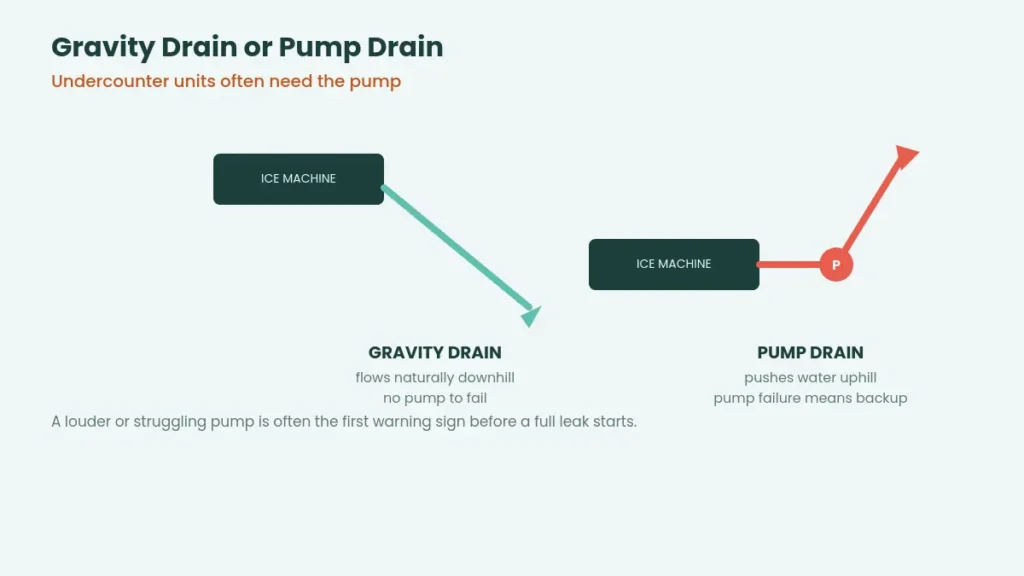
A standalone ice machine or a refrigerator’s ice maker almost always drains straight down by gravity into a reservoir or directly out the back. Undercounter units like Sub Zero and U Line models are frequently installed below the counter line with no straight gravity path to a drain, which means many of them rely on a small condensate or drain pump to actively push water uphill and out to the plumbing. That pump is a mechanical part that can fail, and it’s a component standalone ice machines simply don’t have to deal with, which is one of the first things worth understanding before troubleshooting begins.
The other structural difference is space. These units are built into tight cabinetry with very little clearance, so a water supply line connection, a drain fitting, or a condensate pump that fails doesn’t drip onto an open floor where you’d notice immediately. It drips onto the cabinet base, behind the toe kick, or into the wall cavity the unit backs up against, and by the time it becomes visible, it may have been happening for days or weeks.
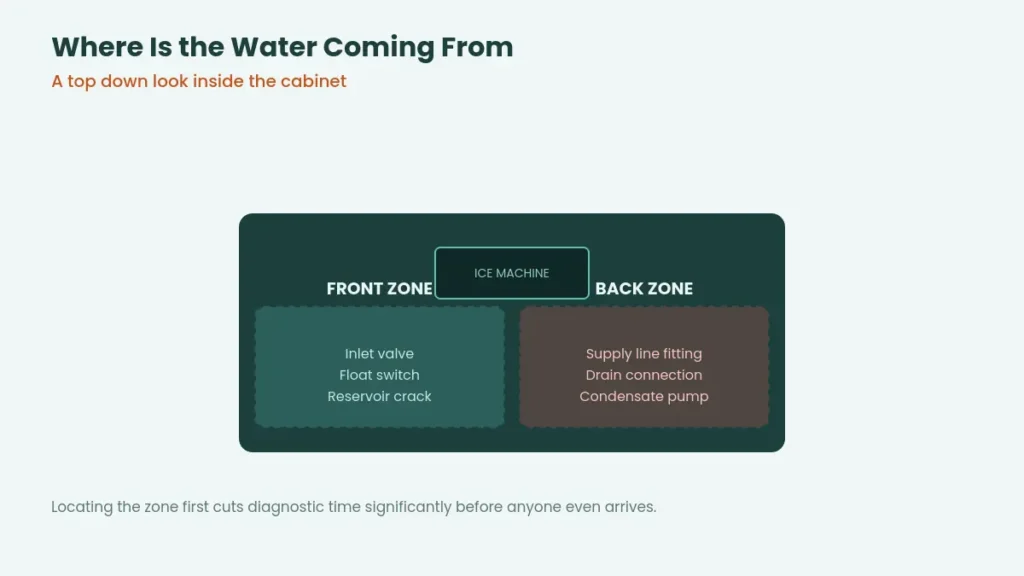
First, Figure Out Roughly Where the Water Is Coming From
Before diagnosing a specific cause, it helps enormously to narrow down which end of the unit the water is actually coming from, since that alone eliminates half the possibilities immediately. Pull the unit out from its cabinet opening if you’re able to safely do so, or at minimum open the front panel and look with a flashlight.
Water pooling near the front, close to where the ice bin or reservoir sits, usually points toward the water inlet valve, the float switch that controls fill level, or a cracked reservoir itself. Water appearing toward the back of the unit, near where the water line and drain connections enter, points more toward a supply line fitting, a drain hose connection, or on pump drain models, the pump and its tubing. This single observation, front versus back, is often enough to cut a technician’s diagnostic time significantly, and it’s worth doing before you even pick up the phone.
The Most Common Cause: A Loose or Failing Water Supply Connection
The water supply line delivers fresh water into the machine to be frozen into ice, and it connects at a fitting that can loosen over time from vibration, thermal expansion and contraction, or simply age. A compression fitting that was never fully tightened during the original installation is one of the single most common sources of a slow, easy to miss leak, since it often produces just a small drip rather than an obvious spray, which is exactly why it can go unnoticed for a long time in a tight cabinet space.
Checking this yourself involves looking at the connection point where the water line meets the back of the unit, feeling for dampness or mineral crusting around the fitting, which is a telltale sign of a slow leak that’s been evaporating and leaving mineral residue behind. Tightening a loose fitting costs nothing and takes a couple of minutes. A cracked line or a fitting that won’t seal properly even when tightened typically runs $80 to $150 to replace including labor.
Drain Line Clogs and Improper Slope
On gravity drain installations, the drain line has to maintain a consistent downward slope the entire way to the drain point, and even a small section that’s level or slightly uphill can cause water to back up and overflow at the machine rather than draining away properly. Mineral buildup and occasional debris inside the line narrow it over time in the same way a kitchen sink drain slowly clogs, restricting flow until the machine’s normal water output exceeds what the line can carry away.
A partially clogged or poorly sloped drain often shows up as intermittent leaking, worse after the machine has been producing ice heavily, rather than a constant drip, since it only overflows when drainage can’t keep pace with production. Clearing a clogged gravity drain line typically costs $90 to $160, while correcting a slope problem depends heavily on the specific installation and sometimes requires rerouting a section of line.
Condensate Pump Failure: The Undercounter Specific Culprit
On installations where the drain has to travel uphill to reach the home’s plumbing, a small condensate pump does the work gravity would otherwise handle. These pumps contain a float switch and a small motor, and either component failing stops water from being removed at all, causing it to back up inside the unit until it overflows. This is one of the more common causes specifically on undercounter Sub Zero and U Line installations, since standalone units rarely need a pump in the first place.
A failing pump often gives a warning before it dies completely, running louder than normal, cycling more frequently, or struggling audibly to push water through the line. Pump replacement typically runs $140 to $240 including labor, and a technician can usually confirm pump failure within a few minutes by testing whether it activates and builds pressure correctly when triggered manually.
An Unlevel Machine Causes Water to Pool Instead of Drain
Ice machines are engineered to drain properly only when sitting level, and undercounter units are especially sensitive to this since they’re wedged into a fixed cabinet opening that may not be perfectly level to begin with, or may shift slightly over months and years as flooring settles. Even a small tilt is enough to cause water to pool in one corner of the internal basin rather than flowing evenly toward the drain, eventually overflowing at whichever edge sits lowest.
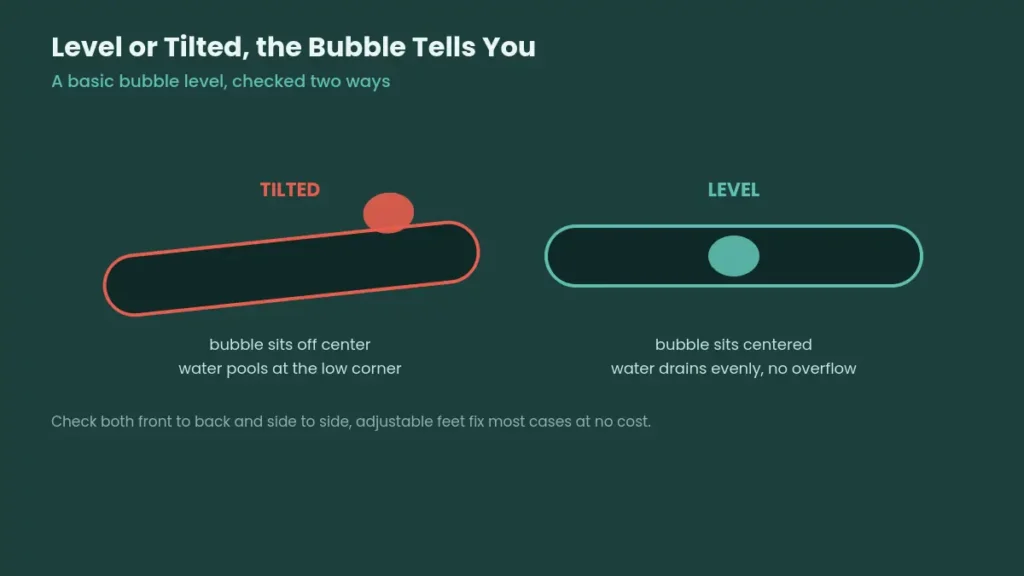
Checking level is simple with a basic bubble level placed on top of the unit or on an interior shelf, checked both front to back and side to side. Most undercounter units have adjustable feet specifically for this purpose, and correcting a level issue is often a free fix that takes only a few minutes once you know it’s the actual cause. If adjustable feet have already been maxed out and the unit still isn’t level, the cabinet opening itself may need shimming, which is a slightly more involved fix but still relatively inexpensive.
Water Inlet Valve or Float Switch Malfunction
The water inlet valve controls how much water enters the machine each fill cycle, and the float switch tells the system when the reservoir has reached the correct level and should stop filling. When either fails, most commonly the float switch sticking in a position that never signals stop, the machine keeps filling well past capacity and water simply overflows the top of the internal reservoir. This tends to produce a more sudden, obvious leak compared to the slower drips associated with connection or drain issues.
Float switch replacement generally costs $100 to $180, while a full water inlet valve replacement runs $120 to $200. Since both parts control the same basic fill process, a technician typically tests both together during a single diagnostic visit to identify which one has actually failed.
Frozen Drain Lines in Cold Installation Spots
Undercounter units installed against an exterior wall, in a garage bar setup, or in any space that gets meaningfully colder than the rest of the house face an extra risk during Michigan winters. If any portion of the drain line runs through or near an unusually cold space, water inside that section can freeze, blocking the line completely and forcing backup at the machine itself, even though the unit and every internal component are working exactly as designed. This is a seasonal cause worth ruling out if a previously reliable machine suddenly starts leaking specifically during a hard cold stretch.
Why a Leak Under the Counter Is More Urgent Than It Looks
It’s worth being direct about this. A dripping ice machine under a counter isn’t just a nuisance, it’s sitting directly on top of cabinetry, subfloor, and sometimes flooring that were never designed to handle ongoing moisture exposure. Particleboard cabinet bases swell and delaminate within days of sustained dampness, and moisture that reaches a subfloor can lead to warping or, in a worst case scenario, mold growth in a space that’s hard to inspect regularly since it’s hidden behind a closed cabinet door. A leak that seems minor when you first notice a small puddle can represent real structural cost if it’s been happening for a while before discovery.
This is exactly why a slow, easy to overlook leak deserves the same urgency as an obvious one. If you’ve noticed any dampness, warping, or a musty smell coming from the cabinet housing your ice machine, it’s worth having it checked even if you haven’t seen standing water recently, since intermittent leaks are often the hardest type to catch in the act.
What You Can Safely Check Yourself First
- Look and feel for dampness or mineral crusting at the water line connection behind the unit
- Place a bubble level on top of the unit, checking both directions
- Note whether water appears near the front reservoir area or the back drain and supply area
- Listen for a condensate pump running louder or more frequently than usual, if your model has one
- Track whether the leak is constant, or worse specifically after heavy ice production
These checks take about ten minutes combined and require no tools beyond a flashlight and a basic level, but they’ll usually point you toward one of the specific causes above before a technician even arrives, which speeds up the actual repair visit considerably.
Why This Shows Up Often in Michigan Homes
Undercounter ice machines have become a common feature in kitchen islands and home bar setups across newer construction and remodeled kitchens throughout the state, and we see this specific complaint regularly in homes around Macomb and Romulus, often in installations that back up against an exterior wall or sit in a lower level bar area that runs cooler than the main living space. Older cabinetry that has settled slightly over the years is also more likely to throw a previously level installation out of alignment, which ties directly back to the leveling issue covered earlier.
Frequently Asked Questions About an Undercounter Ice Machine Leaking
Why is my Sub Zero or U Line ice machine leaking but only sometimes?
Intermittent leaking, especially worse after periods of heavy ice production, usually points to a partially clogged drain line or a condensate pump that’s struggling but hasn’t fully failed yet. A leak that’s constant regardless of use more often points to a loose supply connection or a stuck float switch.
Can a leaking ice machine damage my cabinets?
Yes, and often faster than people expect. Particleboard cabinet bases can swell and delaminate within days of sustained moisture exposure, and water can travel along the cabinet floor to affect areas well beyond the machine itself before the leak becomes visibly obvious.
How do I know if it’s the water line or the drain causing the leak?
Water appearing near the front of the unit, close to the ice reservoir, usually points to the water line, inlet valve, or float switch. Water appearing toward the back, near where the supply and drain connections enter, points more toward the drain line, its connection fittings, or the condensate pump on pump drain models.
Is it expensive to fix an undercounter ice machine leak?
Most causes fall between $80 and $240 depending on the specific part involved, with a loose supply line connection being essentially free to fix and a condensate pump replacement sitting at the higher end. None of the common causes require replacing the entire unit.
What is a condensate pump and why does my ice machine have one?
A condensate pump actively pushes drain water uphill to reach your home’s plumbing when a unit can’t rely on gravity alone, which is common on undercounter installations where the drain path isn’t naturally downhill. Standalone ice machines usually drain by gravity and don’t need one, which is why this specific failure point is more associated with built in units.
Get an Accurate Diagnosis Before Damage Spreads
A leaking undercounter ice machine has several likely causes, and because the consequences of letting it continue are more serious than a typical appliance drip, getting an accurate diagnosis quickly matters more here than with most other repairs. If your unit is also having trouble producing ice on top of the leak, our guide on why an ice maker stops making ice or produces cloudy cubes covers those specific symptoms in detail.
Motor City Appliance Pros repairs Sub Zero, U Line, and other built in ice machines across Michigan every week, with same day appointments and a 90 day warranty on every repair. If your oven or range needs attention at the same time, our technicians can often take care of everything during a single visit.