
Why an ice maker suddenly stops filling the bin, or keeps filling it with cubes that look more like frosted glass than actual ice, comes down to two very different problems that happen to share the same appliance. A total stop in production almost always traces back to water simply not reaching the ice maker, whether that’s a stuck inlet valve, a frozen line, or a clogged filter. Cloudy or off tasting cubes are a different story entirely, usually pointing to mineral buildup, an old filter, or ice freezing faster than trapped air and minerals can escape. This guide walks through both, since knowing which one you’re dealing with changes where you should even start looking.
Both issues show up on standalone ice machines and on the ice makers built into refrigerators, though the specific parts involved differ a bit between the two. Most causes here are inexpensive fixes rather than a sign the whole unit needs replacing, so it’s worth working through the list before assuming the worst. An ice maker is a fairly simple mechanism at its core, water comes in, freezes, and gets ejected on a timer, which means most failures trace back to one specific step in that chain rather than a mysterious total breakdown.
First, Figure Out Which Problem You Actually Have
No ice at all and cloudy ice are close to opposite problems. One means water isn’t getting into the machine in any meaningful amount. The other means water is getting in just fine but something about how it freezes, or what’s dissolved in it, is off. Mixing these up wastes time, so before doing anything else, open the freezer and look. An empty tray or bin with the motor still cycling normally points toward a water supply issue. A bin filling up with hazy, opaque, or oddly shaped cubes points toward water quality or a freezing speed problem instead.
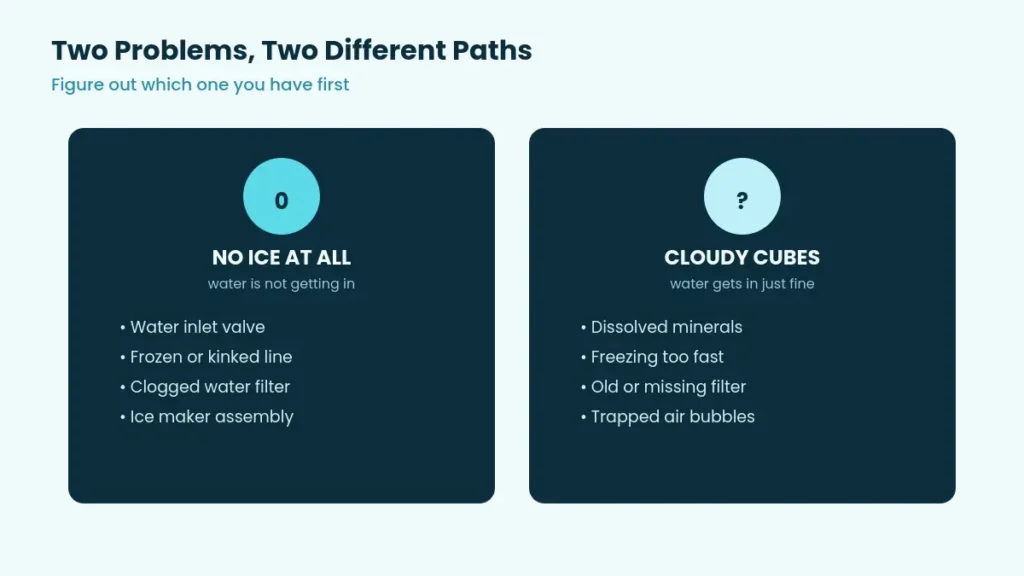
No Ice at All: The Water Inlet Valve
The water inlet valve is the small electrically controlled valve that opens briefly each cycle to let water flow from your home’s supply line into the ice maker. It’s the single most common point of failure when an ice maker stops producing altogether. Mineral deposits build up inside the valve over months and years, especially in areas with harder water, until the valve either can’t open fully or stops opening at all.
A valve that’s partially clogged sometimes still lets a trickle through, which shows up as smaller than normal cubes or painfully slow ice production rather than a complete stop. A valve that’s fully seized usually means nothing happens at all, cycle after cycle. Replacing an inlet valve typically runs $120 to $220 including labor, and it’s usually the first thing a technician checks because it’s both common and relatively affordable to fix.
Frozen or Kinked Water Supply Line
Behind most refrigerators and standalone ice machines sits a thin plastic or copper line carrying water in from the wall. If that line gets kinked when the unit is pushed back into place, or if it runs through an unusually cold space, and yes, this happens more than people expect, it can freeze solid or partially restrict flow long before the valve itself is even the problem.
This is worth checking early because the fix costs nothing if it’s simply a kink. A genuinely frozen line usually needs to thaw naturally over several hours with the unit pulled slightly away from the wall, though a technician can sometimes speed this along safely. If the line has actually cracked from freezing, replacement is a straightforward $80 to $150 repair.
Overdue or Clogged Water Filter
Most refrigerator ice makers, and plenty of standalone units, run incoming water through a filter before it ever reaches the ice tray. These filters are rated for a certain volume of water, typically good for around six months of normal household use, and once they’re saturated with trapped sediment, flow slows dramatically or stops. A filter this clogged behaves almost identically to a failing inlet valve from the outside, slow or absent ice production, which is exactly why checking the filter age is one of the first easy wins worth trying.
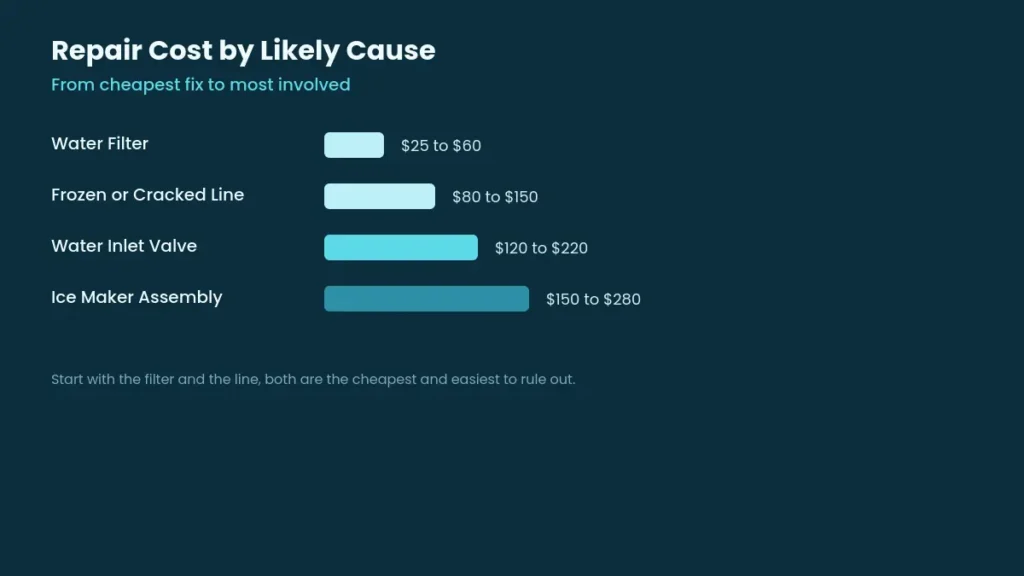
A basic replacement filter runs $25 to $60 depending on the brand and model, making this one of the cheapest possible fixes on this entire list. If you genuinely can’t remember the last time it was swapped, that alone is a reasonable place to start before calling anyone.
Cloudy Ice: Why It Happens and What It Means
Cloudy cubes are almost never a sign of anything dangerous, but they usually mean one of two things. The first is water quality, dissolved minerals like calcium and magnesium that are common in Michigan’s harder water areas get trapped inside the cube as it freezes, scattering light and creating that hazy, opaque look instead of clear ice. The second is freezing speed. Ice that forms too quickly traps tiny air bubbles and minerals in the center before they can be pushed out, which is actually the same reason bagged ice from the store looks clearer than homemade cubes, commercial machines freeze more slowly and from the outside in.
An old or missing water filter makes cloudiness worse, since filtering is exactly what’s supposed to catch a lot of that dissolved mineral content before it reaches the tray. If your cubes have gradually gotten cloudier over months rather than appearing cloudy all at once, an overdue filter change is worth trying first, since it’s the cheapest possible explanation and fixes itself the moment fresh water starts flowing through new media.
Ice Maker Assembly and Thermostat Issues
Inside the ice maker head itself sits a small thermostat that senses when the water in the tray has frozen solid enough to eject. When this thermostat fails, or the small module that controls the whole ejection cycle wears out, the ice maker can behave erratically, sometimes producing partially frozen or oddly shaped cubes, sometimes stopping the cycle before ice ever fully forms. This is less common than a valve, line, or filter issue but shows up more often on units past seven or eight years old.
Replacing the full ice maker assembly, thermostat included, typically costs $150 to $280 depending on whether it’s a refrigerator mounted unit or part of a standalone ice machine. This is usually the point where a technician rules out the cheaper, more common causes first, since there’s no reason to replace an entire assembly if a $30 filter or a $150 valve was actually the problem all along. A technician will typically run the ice maker through a manual test cycle to watch exactly where in the process it fails, which tells them within a few minutes whether the assembly itself is the real problem or just an innocent bystander.
What You Can Check Yourself First
- Confirm the water supply valve behind the fridge or machine is fully open
- Check the filter’s install date, most are labeled with a change by date
- Look behind the unit for an obviously kinked supply line
- Note whether cubes are smaller than normal, which points toward a partial clog
- Track whether cloudiness appeared suddenly or built up gradually over months
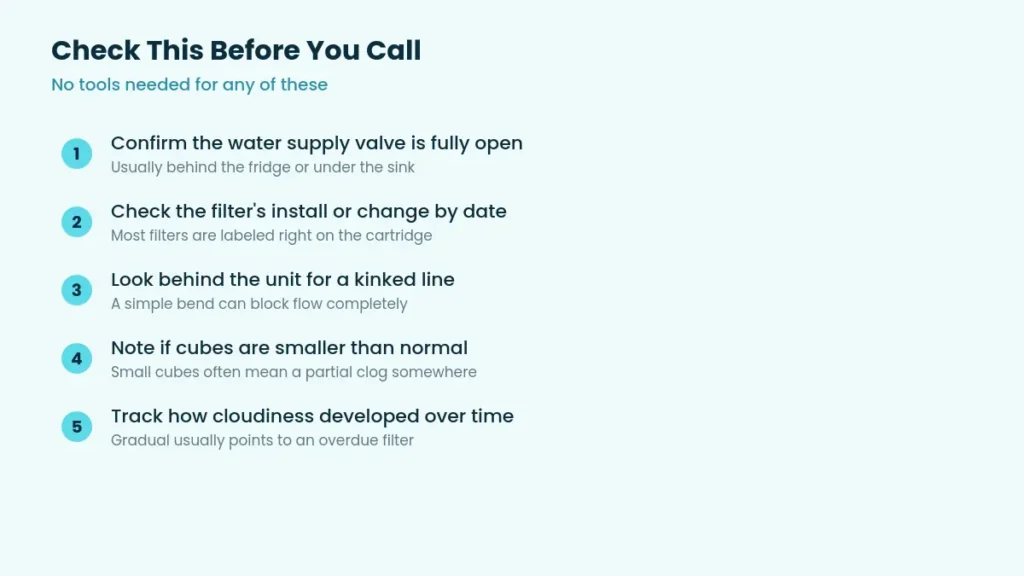
None of these checks take more than a few minutes, and together they’ll usually tell you whether you’re dealing with a five dollar fix or something that needs a technician’s attention.
Why Michigan Winters Make the Frozen Line Problem Worse
Ice makers that sit in a garage refrigerator, or in a kitchen with a supply line running along an exterior wall, deal with a genuinely different set of conditions once temperatures drop. A line that runs perfectly fine all summer can sit close enough to an uninsulated wall or unheated space that it partially freezes during a hard Michigan cold snap, even though the appliance itself is working exactly as designed. We see this pattern often in Farmington Hills and Clinton Township homes with garage refrigerators or standalone ice machines in a mudroom or basement bar area, right as the first real cold stretch of the year sets in. It’s one of the more seasonal causes on this list and worth mentioning to a technician if production slowed down around the same time temperatures dropped.
Frequently Asked Questions About Ice Makers Not Working Properly
Why did my ice maker suddenly stop making ice?
A sudden stop most often points to the water inlet valve failing to open, a frozen or kinked supply line, or a fully clogged water filter. All three block water from reaching the ice tray in the first place, which stops production entirely rather than just slowing it down.
Is cloudy ice safe to use?
Yes. Cloudy ice is almost always caused by dissolved minerals or trapped air from the freezing process, not contamination. It’s a cosmetic and sometimes taste issue rather than a safety concern, though a very old or dirty filter is worth replacing regardless.
How often should I replace my ice maker’s water filter?
Most manufacturers recommend replacing the filter about every six months under normal household use, though homes with harder water or heavier ice usage may need to replace it more often. A steadily slowing ice production rate or increasingly cloudy cubes are both signs it’s overdue.
Can I fix a frozen ice maker water line myself?
If the line is simply kinked, straightening it yourself is safe and free. A genuinely frozen line usually just needs time to thaw with the appliance pulled slightly away from the wall. If the line has cracked from freezing, replacement is a simple repair a technician can usually complete in one visit.
How much does it cost to fix an ice maker that stopped working?
Most causes fall between $25 for a new filter and $220 for a water inlet valve replacement. If you’re in South Florida and dealing with the same issue, Appliance Repair Sunrise serves the Broward County area with same-day service. A full ice maker assembly replacement, needed less often, typically runs $150 to $280 depending on the unit.
Get a Straight Answer Instead of Guessing
An ice maker that’s stopped working, or one that’s producing cubes you’d rather not put in a drink, has a handful of likely causes, and the cheapest ones are usually worth ruling out first. When they’re not the issue, a technician can pinpoint exactly what’s failed and give you a real repair cost before any work begins.
Motor City Appliance Pros repairs ice makers and standalone ice machines across Michigan every week, with same day appointments and a 90 day warranty on every repair. If your washing machine needs attention too, our technicians can often handle both in a single visit.