
Why your washing machine finishes a cycle with a tub full of standing water almost always comes down to something blocking or stopping the drain path, not a failure of the whole machine. Washers push dirty water out through a pump and a hose, and if anything along that path gets clogged, kinked, or loses power, water simply has nowhere to go. The most common cause across both top load and front load machines is a clogged drain pump, followed by a kinked or clogged drain hose, a failed lid or door switch, and less often a bad drive belt or control board. This guide walks through each cause in the order a technician actually checks them, along with a few things you can look at yourself first.
Most of these causes are affordable, same day fixes rather than a sign the washer needs replacing, even on machines eight or nine years old. The key is narrowing down which part is actually blocking the water, since the fix and the cost are different for each one. Think of it less as the washer breaking down and more as one specific point in the drain path getting blocked while everything else keeps working.
Start Here: What Kind of Washer Do You Have
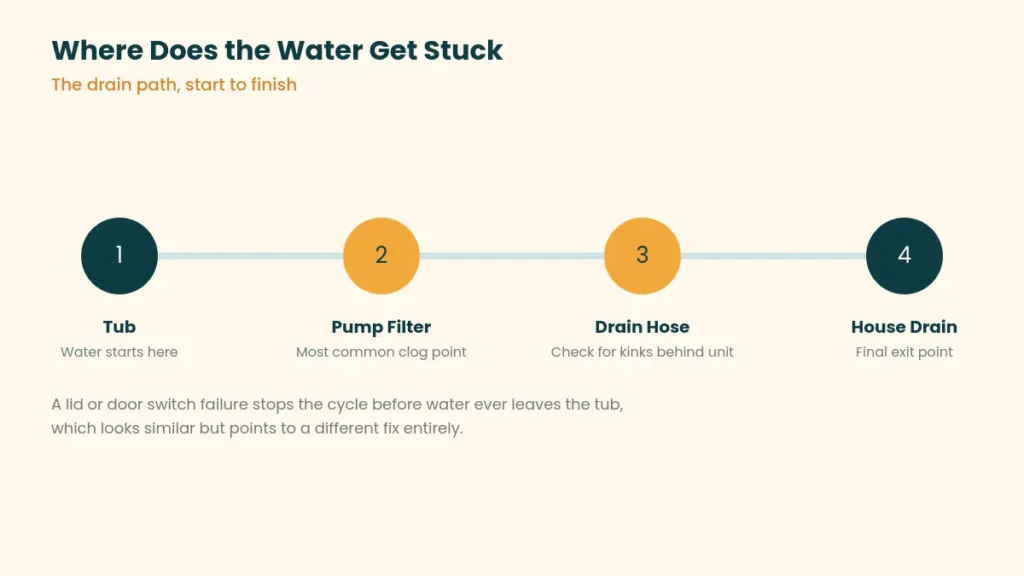
Top load and front load washers drain the same basic way, through a pump that pushes water out to a hose, but they fail in slightly different patterns. Front load washers have a small trap door at the bottom front of the machine that covers the drain pump filter, and this filter catches coins, buttons, hair, and pet fur that eventually block water flow entirely. Top load washers rely more heavily on the pump itself and the drain hose, since most modern top load models do not have an easily accessible filter.
Knowing which type you have matters because it changes both what you can check yourself and how a technician approaches the repair. Front load owners often have a five minute, no cost fix available to them that top load owners simply do not, which is worth trying before assuming the worst.
The Most Common Cause: A Clogged Drain Pump
The drain pump is the small motor that physically pushes water out of the tub and through the hose to your drain line. Over months and years of use, small items work their way past the tub and get lodged in the pump itself or its intake filter, gradually restricting flow until the pump can no longer push water out fast enough, or at all.
On front load washers, this is usually the easiest cause to check yourself, since the pump filter access panel sits behind a small door at the bottom front of the machine. Clearing a clogged pump filter is often a simple, no cost fix, though a small amount of water will drain out when you open the panel, so keep a shallow pan and towel ready. On top load washers, the pump is harder to access and typically requires a technician, with replacement or clearing running $150 to $280 including labor.
Kinked or Clogged Drain Hose
The drain hose carries water from the pump to your home’s drain line, and if it gets kinked behind the machine, crushed by the washer being pushed too close to the wall, or clogged with lint and debris, water backs up with nowhere to go. This is one of the most overlooked causes, since the hose is usually out of sight behind the machine and rarely gets checked until something goes wrong.
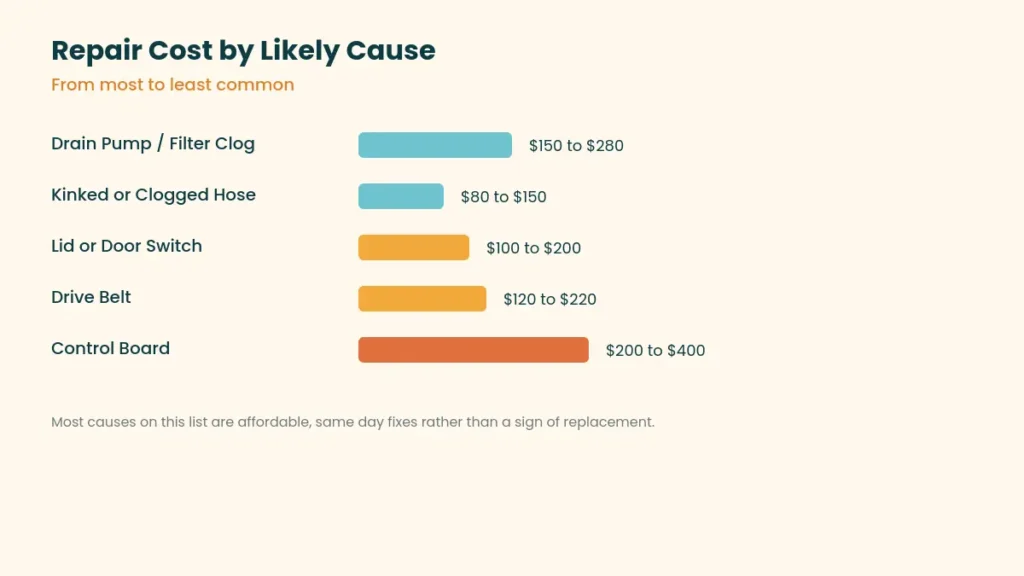
Straightening a kinked hose costs nothing beyond pulling the machine out and checking the path. A hose that is actually clogged or damaged typically costs $80 to $150 to replace including labor. If your washer sits in a tight laundry closet or has been pushed back against the wall recently, this is one of the first things worth checking yourself before calling anyone.
It is also worth checking the standpipe or drain your hose empties into, since a partially blocked house drain can back water up into the washer in a way that looks identical to a machine level problem. Running a sink nearby to see if it drains normally is a quick way to rule this out before assuming the washer itself is at fault.
Failed Lid Switch or Door Latch
Washing machines will not drain, and often will not complete a cycle at all, if the machine does not register that the lid or door is properly closed and locked. On top load machines, this is a lid switch, a small sensor that detects when the lid is down. On front load machines, it is the door latch and its interlock switch. When either fails, the washer’s control board assumes the door is open and halts the cycle mid drain as a safety measure, leaving water sitting in the tub.
A failed lid switch or door latch typically costs $100 to $200 to replace. A useful sign pointing to this cause specifically is a washer that stopped mid cycle with an error code or a blinking light, rather than one that ran the full cycle and simply left water behind silently.
Less Common Causes: Drive Belt and Control Board
On some top load washers, particularly older models, a single belt drives both the agitator or drum and the drain pump. If that belt slips or breaks, the washer can still fill and agitate normally for part of the cycle while completely failing to drain, since the pump never receives power to spin. Belt replacement generally runs $120 to $220.
A failing control board is the least common cause on this list but the most expensive, since it can misread sensor signals and never send the command to drain at all. Control board issues typically cost $200 to $400 to diagnose and repair, and are more common on washers with digital displays past the eight to ten year mark.
What to Check Yourself Before Calling a Technician
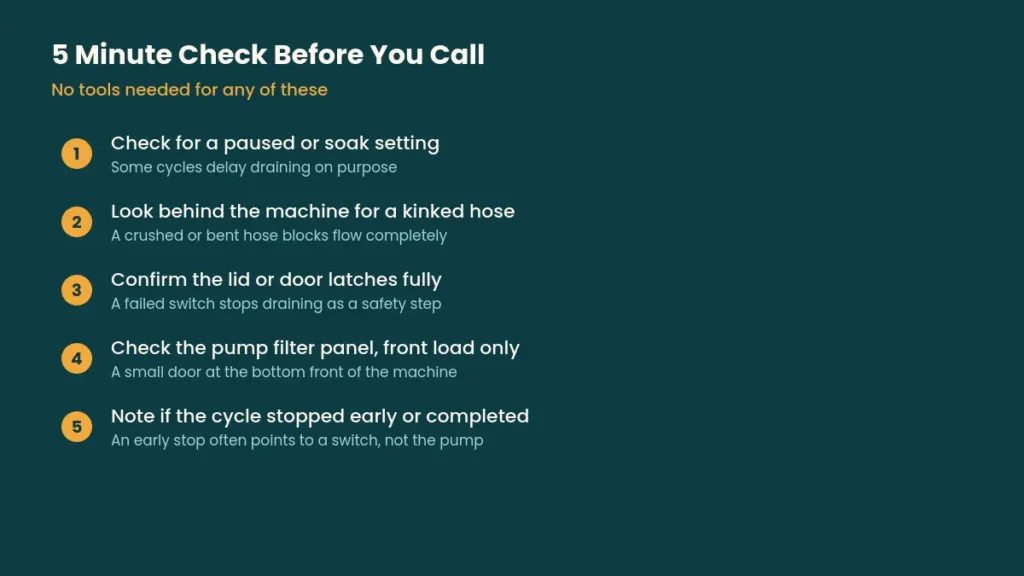
- Make sure the washer is not in a paused or soak setting that delays draining
- Check behind the machine for an obviously kinked or crushed drain hose
- Confirm the lid or door is closing and latching fully with no obstruction
- On front load models, look for a small access panel with a drain filter to clear
- Note whether the cycle stopped early with an error, or completed with water left behind
None of these checks require special tools, and together they take about five minutes. If everything checks out and the washer still will not drain, the cause is almost certainly the pump, hose, or a switch covered above, and it is time to call for a diagnostic visit.
Why This Happens More Often in Michigan Homes
Hard water is common across much of Michigan, and mineral buildup inside a drain pump and hose over years of use narrows the internal passage gradually, making a partial clog more likely even without an obvious foreign object involved. Homes with older plumbing and longer drain runs, which show up often in established neighborhoods around Southgate and Southfield, can also see slower drainage on the house side, which sometimes gets mistaken for a washer problem when the real restriction is further down the line. If your home has older plumbing, mentioning that detail helps a technician rule out the right things faster.
Cold Michigan winters play a smaller but real role too. Laundry rooms in unheated basements or garages sometimes see drain hoses stiffen in low temperatures, making an existing kink more likely to fully restrict flow rather than just partially slow it, right around the time of year homeowners are already running more loads of heavy winter clothing.
Frequently Asked Questions About a Washer That Will Not Drain
Why is my washing machine full of water and not draining?
This almost always means something is blocking the path water takes out of the machine, most commonly a clogged drain pump or filter, a kinked drain hose, or a lid or door switch that has failed and stopped the cycle mid drain as a safety measure.
Can I fix a washing machine that will not drain myself?
On front load washers, clearing the drain pump filter behind the small access panel is often something you can do yourself, though water will spill out when you open it. Straightening a kinked hose is also a simple check. Replacing a pump, switch, belt, or control board is safer left to a technician.
Is it safe to leave water sitting in my washer overnight?
Standing water in a washer will not damage the machine overnight, but it is worth avoiding for more than a day or two, since stagnant water can start to smell and encourage mold growth, particularly in front load machines with rubber door gaskets.
How much does it cost to fix a washer that will not drain?
Most causes fall between $80 and $280, including a clogged hose, drain pump, or a failed lid or door switch. A control board issue is less common but can run $200 to $400, particularly on washers past eight to ten years old.
How do I get standing water out of my washer before a repair visit?
Many washers can be manually drained by locating the drain hose behind the machine, lowering it into a shallow pan, and letting gravity pull the water out. If you are not comfortable accessing the hose yourself, a technician can drain the machine safely as part of the service visit.
Get a Same Day Diagnosis Instead of Guessing
A washer that will not drain has several possible causes, and while the checklist above can narrow things down, an accurate diagnosis still comes down to a technician testing the actual components inside your machine. Guessing wrong means paying for a part that was never the problem.
Motor City Appliance Pros diagnoses and repairs this exact issue across Michigan every week, with same day appointments and a 90 day warranty on every repair. If your dishwasher or oven is acting up at the same time, our technicians can often take care of everything in a single visit.