
Why a Sub Zero refrigerator turns lettuce into a block of green ice and leaves milk with ice crystals floating on top almost always comes down to too much cold air reaching the fresh food compartment, not a mysterious overall malfunction. Sub Zero units are built around a dual refrigeration design, meaning the fresh food side and the freezer side each have their own dedicated cooling system rather than sharing one like most standard refrigerators. When that fresh food side starts running colder than it should, the most common culprits are a stuck air damper letting in too much cold air, a thermostat or control board misreading the actual temperature, or a failing sensor reporting numbers that don’t match reality. This guide walks through each of these, along with a few Sub Zero specific quirks worth knowing before you call anyone.
Because Sub Zero units are engineered differently than a standard refrigerator, a few of the usual troubleshooting assumptions don’t quite apply the same way, which is part of why this specific complaint is worth its own dedicated look rather than treating it like a generic fridge problem. Most causes here are fixable without replacing the unit, even on Sub Zero refrigerators that are well past ten years old, since these are built to be serviced and maintained over a genuinely long lifespan rather than replaced at the first sign of trouble.
Why Sub Zero Refrigerators Behave Differently Than Standard Fridges
Most conventional refrigerators use a single evaporator and a single cooling system, with a damper simply directing some of that cold air toward the fresh food section and the rest staying in the freezer. Sub Zero built its reputation on a dual refrigeration system instead, where the fresh food compartment and the freezer each have their own independent sealed system, compressor work, and air handling. The idea is better humidity control and more precise temperature management in the fresh food section, since it’s not just getting whatever leftover cold air the freezer happens to produce.
The tradeoff is that when something goes wrong specifically on the fresh food side, it’s a genuinely separate system from the freezer, which means the freezer can be working perfectly while the fresh food compartment behaves erratically, or vice versa. This is exactly why freezing food in the fresh food section doesn’t necessarily point to the same causes you’d research for a standard single system refrigerator doing the same thing. A generic troubleshooting guide written for a Whirlpool or a GE simply won’t map cleanly onto how a Sub Zero actually distributes and regulates its cooling, which is part of why owners sometimes end up more confused after searching online rather than less.
The Most Common Cause: A Stuck or Miscalibrated Air Damper
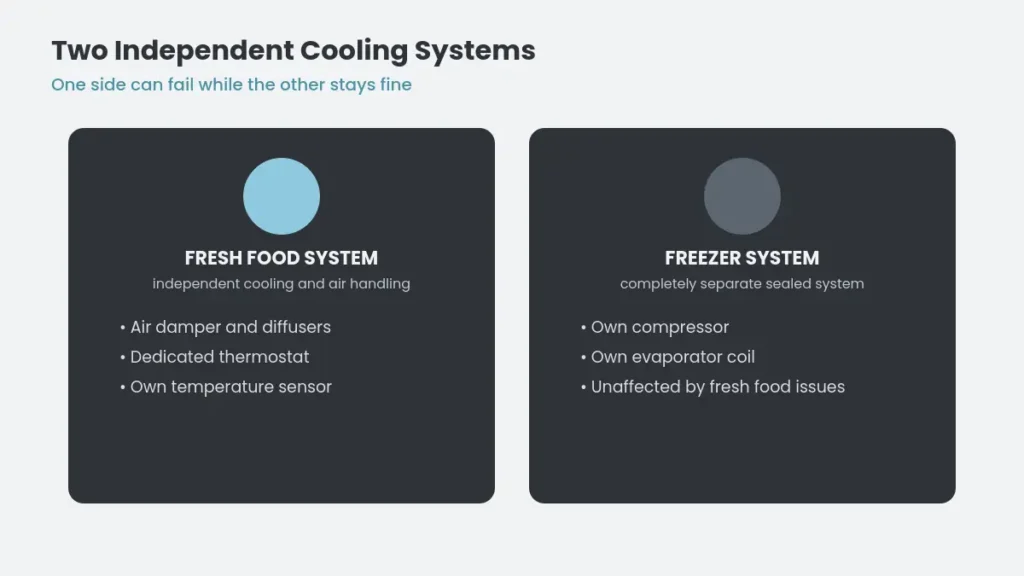
Even with a dual refrigeration design, Sub Zero units use air dampers and diffusers to fine tune exactly how cold air circulates within the fresh food compartment itself, directing it evenly rather than dumping it all in one spot. When a damper motor fails or the damper physically sticks in a more open position than it should, cold air concentrates in specific areas rather than distributing evenly, which is why freezing often shows up worse on certain shelves or in certain bins rather than uniformly throughout the compartment.
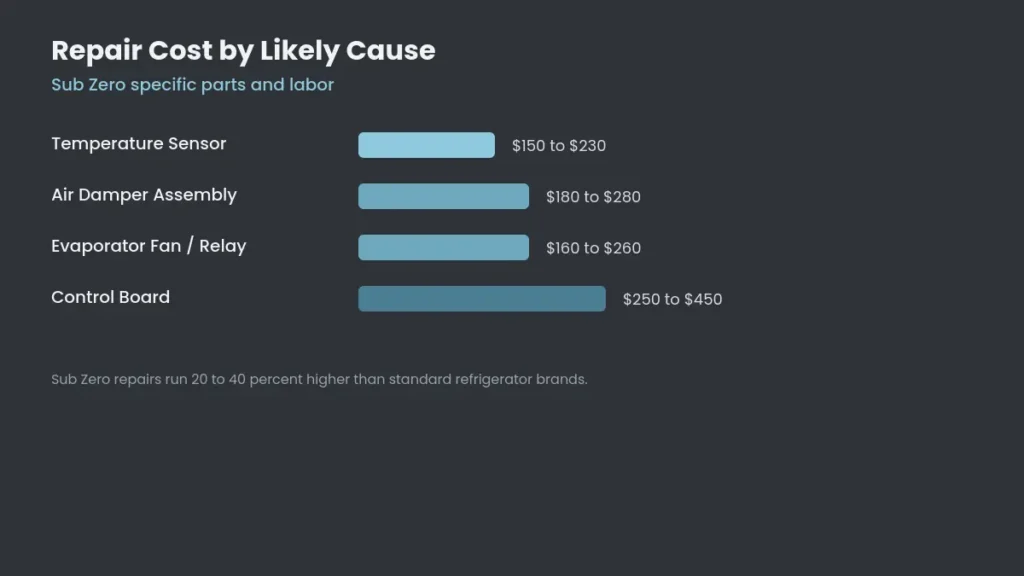
This unevenness is actually a useful diagnostic clue. If everything in the fresh food section is uniformly over cold, that points more toward a thermostat or sensor issue affecting the whole compartment. If specific shelves or the back wall area are consistently the problem while other areas stay normal, a stuck damper directing air unevenly is the more likely explanation. Damper assembly replacement typically runs $180 to $280 on Sub Zero units, reflecting the more specialized parts and diagnostic time these systems require compared to standard refrigerator brands.
Thermostat and Control Board Issues
The electronic control board manages target temperatures for both sides of the unit and signals the compressor and fan when to run. On models with a single shared control board, a software glitch or a failing board can send incorrect signals specifically to the fresh food side’s cooling components, telling them to run harder and longer than the actual set temperature calls for. This tends to produce a slow, creeping drop in temperature over several days rather than a sudden freeze, which is worth mentioning to a technician since it helps narrow down whether the board or something more mechanical is at fault.
Control board issues are less common than damper problems but more expensive to resolve, typically $250 to $450 depending on the specific model and whether the board needs to be ordered rather than kept in stock. A technician will usually run diagnostic checks on the simpler, cheaper components first before concluding the board itself needs replacement.
A Failing Temperature Sensor Reports the Wrong Number
Sub Zero refrigerators rely on temperature sensors positioned within the fresh food compartment to tell the control board what the actual internal temperature is. When a sensor drifts or fails, it can report a temperature warmer than reality, which causes the control board to run cooling harder and longer trying to hit a target it thinks it hasn’t reached yet, even though the compartment is already too cold. This is functionally similar to the thermostat problem above but points to a different, generally less expensive part.
Sensor replacement typically runs $150 to $230, and testing it is usually one of the first diagnostic steps a technician takes, since it’s a relatively quick and inexpensive component to rule in or out compared to a full control board.
Evaporator Fan Running Longer or Faster Than It Should
The evaporator fan on the fresh food side circulates air across the cooling coil and out into the compartment. A fan that’s stuck running at high speed, or one that’s failed to cycle off properly due to a relay issue, keeps pushing cold air continuously rather than in the measured cycles the system was designed around. Over several hours, this steady excess airflow is more than enough to freeze produce and dairy items sitting anywhere near a vent.
This cause often comes with an audible clue, a fan that seems to run constantly rather than cycling on and off periodically, sometimes noticeably louder than normal. Fan or relay replacement generally costs $160 to $260, and a technician can typically confirm this diagnosis simply by listening to the unit’s cycling pattern over a short period during the visit.
Simple Things Worth Checking Before Assuming a Part Failed
A few things are worth ruling out before assuming a component has genuinely failed. Food or containers placed directly against the back wall or too close to a vent opening sit in the coldest airflow path in the compartment and can appear frozen even when the rest of the unit is working exactly as designed. Similarly, a temperature setting that’s simply been bumped colder than intended, easy to do accidentally on a digital control panel, produces the exact same symptom with no actual malfunction involved at all.
Checking both of these takes a couple of minutes and costs nothing, which makes it worth doing before assuming the worst, especially since Sub Zero repairs tend to run higher than standard refrigerator brands given the specialized parts and dual system design involved.
Why Sub Zero Repairs Cost More Than Standard Refrigerator Repairs
It’s worth setting expectations here. Because Sub Zero uses proprietary parts, a more complex dual refrigeration architecture, and requires technicians with specific training on the brand, repair costs across the board tend to run 20 to 40 percent higher than the same category of repair on a standard refrigerator brand. This isn’t a sign of being overcharged, it genuinely reflects the more specialized diagnostic work and parts sourcing involved. Given the price of the units themselves, however, repair almost always remains the financially sensible choice over replacement, since even a $400 control board repair is a small fraction of what a new built in Sub Zero unit costs.
What You Can Check Yourself First
- Confirm the temperature setting has not been accidentally adjusted colder
- Check whether affected items are sitting directly against the back wall or a vent
- Note whether freezing is uniform throughout or concentrated in specific spots
- Listen for whether the fan cycles on and off or runs continuously
- Track whether the problem developed suddenly or crept in gradually over days
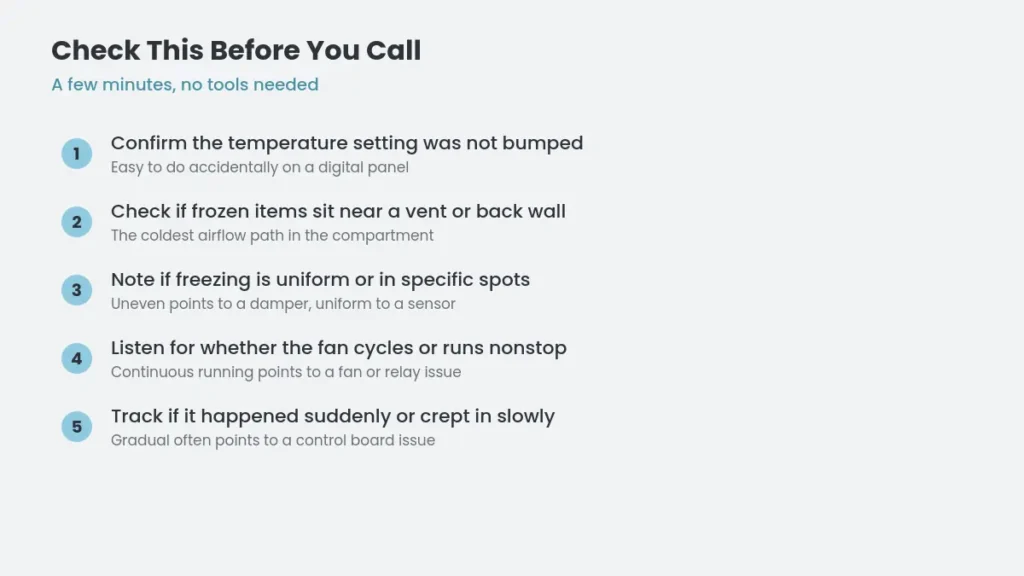
These checks take just a few minutes and will usually point toward either a simple placement or settings fix, or a specific component worth having a technician confirm and address.
Why This Comes Up Often in Michigan’s Newer Construction
Sub Zero units are especially common in newer builds and remodeled kitchens across the state, and we see this specific complaint regularly in homes around Rochester Hills and Clinton Township, where built in Sub Zero installations are a common feature in kitchens updated over the past decade. Because these units are often installed flush into custom cabinetry, proper ventilation clearance around the unit matters even more than on a standalone refrigerator, and tight cabinetry fits can occasionally contribute to control board or sensor issues developing sooner than they would in a more open installation.
Frequently Asked Questions About a Sub Zero Refrigerator Freezing Food
Why is my Sub Zero refrigerator freezing food but the freezer seems fine?
Sub Zero refrigerators use a dual refrigeration system, meaning the fresh food side and the freezer are cooled independently. A problem specifically affecting the fresh food side, most often a stuck air damper, a thermostat issue, or a failing sensor, can cause freezing there while the separate freezer system continues working normally.
Why is only part of my fresh food compartment freezing, not all of it?
Uneven freezing, where certain shelves or the back wall area are affected while other spots stay normal, typically points to a stuck or misaligned air damper directing cold air unevenly. A uniform, whole compartment temperature drop points more toward a thermostat or sensor problem instead.
Is it worth repairing a Sub Zero refrigerator, or should I replace it?
Almost always worth repairing. Even on the higher end of Sub Zero repair costs, a few hundred dollars for a control board or damper assembly is a small fraction of the cost of a new built in unit, and most repairs restore full function for years of continued use.
Why are Sub Zero repairs more expensive than repairs on other refrigerator brands?
Sub Zero uses proprietary parts and a more complex dual refrigeration design that requires brand specific technician training, which pushes labor and parts costs higher than a standard single system refrigerator repair. This typically adds 20 to 40 percent to comparable repair costs.
Can I fix a freezing Sub Zero refrigerator myself?
Checking the temperature setting and food placement near vents is safe and often resolves the issue with no repair needed. Diagnosing and replacing an air damper, thermostat, sensor, or control board involves specialized testing and is best left to a technician trained on Sub Zero’s specific system design.
Get an Accurate Diagnosis From a Sub Zero Trained Technician
A Sub Zero refrigerator freezing food has a handful of likely causes, and given how differently these units are engineered compared to standard refrigerators, getting a technician familiar with the dual refrigeration design matters more here than it might for a typical fridge. Guessing at a repair risks paying for a part that was never actually the problem.
Motor City Appliance Pros repairs Sub Zero and other built in refrigerators across Michigan every week, with same day appointments and a 90 day warranty on every repair. If your dishwasher or oven needs attention at the same time, our technicians can often take care of everything during a single visit.