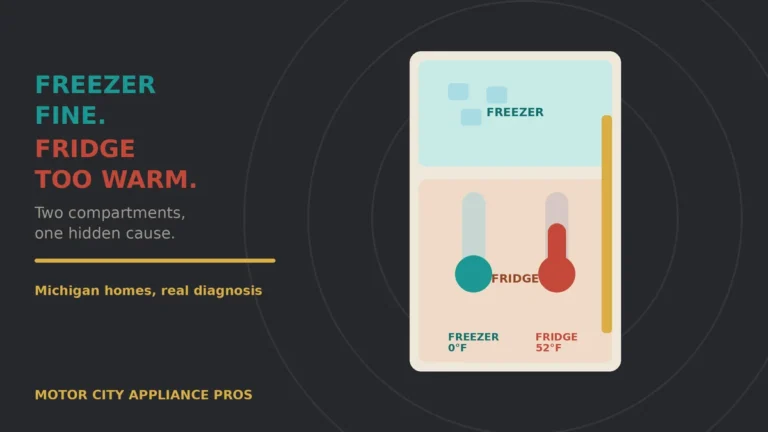

| Quick Answer Your refrigerator condenser coils need cleaning if the fridge runs almost nonstop, food is not staying cold, the back or bottom feels very hot, you can see dust or pet hair on the coils, the fan sounds louder than usual, or your electric bill has crept up. Two or more of these signs together make dirty coils the first thing to check. Fastest check: unplug the fridge, find the coils at the back or behind the front grille, and shine a flashlight on them. A gray, fuzzy layer of dust means they need cleaning. |
Condenser coils do one job: they release the heat your refrigerator pulls out of the food compartments. When a layer of dust, lint, and pet hair sits on them, the heat has nowhere to go. The compressor runs longer, the fridge warms up, and the whole system works under stress. A simple cleaning often fixes the problem for almost no cost, and it can add years to the life of the compressor.
This guide shows you the seven clearest signs, a two minute self test, where the coils sit on different fridge types, and how to clean them safely. It applies to the refrigerators we service every week across Metro Detroit, from Samsung and LG French door models to Whirlpool, GE, KitchenAid, and built in Sub Zero units.
What Condenser Coils Do and Why Dust Matters
A refrigerator does not create cold. It moves heat from the inside of the cabinet to the outside. Refrigerant picks up heat inside the fridge, the compressor pushes it through the condenser coils, and air passing over the coils carries the heat into your kitchen. That last step only works when air flows freely over clean metal. A layer of dust acts like insulation, so the refrigerant stays hot, the pressure rises, and the compressor works longer to do the same job. Over months, that extra strain wears out parts such as the fan motor and the compressor, which is why a ten minute cleaning can save a costly repair.
The 2 Minute Coil Self Test
Run these quick checks before you pick up a brush. They tell you whether dirty coils are likely to be the cause.
- Listen. Stand next to the fridge and note whether the compressor and fan are running. A healthy fridge runs in cycles and shuts off for stretches. If it never seems to stop, that is a warning.
- Feel. Hold your hand near the back or the front bottom grille. Warm air is normal. Very hot air or a hot compressor area is a sign that heat is not escaping.
- Look. Unplug the fridge, remove the grille or back panel if your model allows it, and shine a flashlight on the coils. Gray fuzz, lint, or pet hair is the answer.
- Check the temperature. Refrigerated food should stay at 40 degrees Fahrenheit or colder, and the freezer should sit at 0 degrees. If the readings drift upward, take note.
If two or more of these point the wrong way, clean the coils and watch how the fridge behaves over the next day.
Signs Table: What You Notice and What It Means
| What you notice | Why it points to the coils | What to try first |
| Fridge runs almost nonstop | Heat cannot escape, so the compressor never reaches a rest point | Clean the coils |
| Food not cold enough | The system cannot shed heat fast enough | Clean the coils and check the door seal |
| Very hot back or bottom | Coils are insulated by dust | Unplug and clean |
| Visible dust or pet hair | The coils are partly blocked | Vacuum and brush |
| Louder fan or compressor | Both work harder against restricted airflow | Clean the coils and the fan area |
| Higher electric bill | A struggling compressor uses more power | Clean and compare the next bill |
| Compressor clicks on and off | Overheating may trip the overload protector | Clean, then call a technician if it continues |

Sign by Sign: Why Dirty Coils Cause Each Problem
1. The Fridge Runs Almost Nonstop
What you notice: The compressor hums for hours and rarely clicks off. The fridge feels busy all day and night.
Why it happens: A fridge sheds heat through the coils. With a dust blanket on them, the heat stays in the system, so the cooling cycle never finishes quickly. The compressor keeps running to catch up.
How to fix it: Clean the coils and watch the cycle over the next day. If the fridge starts shutting off between cycles again, dust was the cause.
2. Food and Drinks Are Not Staying Cold
What you notice: Milk spoils early, leftovers feel warm, or the fresh food section drifts above 40 degrees Fahrenheit.
Why it happens: Dirty coils cannot shed enough heat to hold the set temperature. The fridge may also cycle a defrost heater more often as it struggles.
How to fix it: Clean the coils, check the door seal, and keep the vents inside the fridge clear. If food is still warm after a day, a technician should test the fans and the defrost system.
3. The Back or Bottom of the Fridge Is Very Hot
What you notice: The area behind or below the fridge feels much hotter than usual, or hot air blows out of the front grille.
Why it happens: Coils that cannot breathe trap heat near the compressor. Warm is normal. Hot enough that you pull your hand away is not.
How to fix it: Unplug the fridge for a few minutes, let the area cool, and clean the coils. If the compressor stays hot after cleaning, call us.
4. Dust, Lint, or Pet Hair Is Visible on the Coils
What you notice: A flashlight shows a gray layer on the coil fins, or you see clumps of hair at the grille.
Why it happens: Air moves across the coils to carry heat away. Dust and hair block that airflow like a winter coat on a summer day. Homes with pets, carpet, or a nearby dryer vent gather it faster.
How to fix it: Brush and vacuum the coils gently. Do not bend the fins. Clean the front grille and the floor underneath as well.

5. The Fan or Compressor Sounds Louder
What you notice: You hear a steady hum, a buzzing, or a fan that spins faster than it used to.
Why it happens: The condenser fan pulls air across the coils. When the coils are blocked, the fan works harder, and the compressor runs longer, which makes more noise. A fan clogged with dust or a failing fan motor makes the problem worse.
How to fix it: Clean the coils and the fan blades, and listen again. A rattle, grinding, or squeal after cleaning points to a failing fan motor, which needs replacement.
6. The Electric Bill Has Crept Up
What you notice: Nothing else in the house changed, but the bill is higher.
Why it happens: A compressor that runs longer uses more electricity. Dirty coils are a common reason a fridge becomes less efficient over time.
How to fix it: Clean the coils and compare the next bill. A fridge that is more than 12 to 15 years old may also use more power than a modern one, so factor in age.
7. The Compressor Clicks On and Off
What you notice: You hear a click, a short hum, then silence, and the pattern repeats.
Why it happens: A compressor that overheats can trip its overload protector, then try again when it cools. Dirty coils are one cause. A weak start relay or a failing compressor can cause it as well.
How to fix it: Unplug the fridge, clean the coils, and plug it back in. If the clicking returns, stop using the fridge for storage and call a technician. Keep food in a cooler meanwhile.
Where Are the Condenser Coils on Your Fridge?
Location depends on the type and age of your refrigerator. Check your owner’s manual if you are unsure.
| Fridge type | Where the coils sit | How to reach them |
| Most modern top or bottom freezer | Underneath, behind the front kick grille | Pop off the grille and use a coil brush and vacuum |
| Many side by side and French door models | Underneath, behind the front grille or the rear bottom panel | Remove the grille or panel, then brush and vacuum |
| Older fridges and some compact models | On the back of the unit, exposed | Pull the fridge out and brush and vacuum the coils |
| Built in units such as Sub Zero | Behind a grille at the top or bottom, with a fan | Call a technician for safe access |
| Some units with hidden coils | Inside the walls, with no cleaning access | No coil cleaning is possible, so look at other causes |
Standalone ice machines also use condenser coils, and they gather dust and grease quickly. If your undercounter ice machine is making less ice or running hot, coil cleaning is often the first step. See our ice machine repair service if cleaning does not restore normal production.
| Detroit Technician Note In Metro Detroit we see dirty coils most often in three places: kitchens with pets, fridges tucked into a dusty basement or garage, and homes near renovation work. Winter heating also stirs up dust as forced air systems run. On a recent Sub Zero call in Rochester Hills, a seized condenser fan motor was the real problem, and a coil cleaning alone would not have fixed it. If the coils are clean and the fridge is still warm, the fan or compressor is next. |
How to Clean Refrigerator Condenser Coils Safely
You need a coil brush, a vacuum with a brush attachment, a flashlight, and a screwdriver if your grille uses screws. The job takes about twenty minutes.
- Unplug the fridge. Do not rely on the thermostat. Unplug the cord.
- Locate the coils. Remove the front kick grille or the rear access panel.
- Loosen dust with a long, thin coil brush, working between the fins and tubes.
- Vacuum the loosened dust with a brush attachment. Vacuum the grille and the floor under the fridge too.
- Wipe the fan blades and the grille gently with a dry or barely damp cloth. Make sure everything is dry.
- Reattach the panel, plug the fridge in, and check the temperature after 24 hours.

How Often Should You Clean Them?
A typical home benefits from a cleaning every 6 to 12 months. If you have shedding pets, plan on every 3 to 6 months. A fridge in a dusty garage or basement may need a cleaning every 3 months. Your owner’s manual may recommend a different schedule, so follow it when it differs.
What You Should Never Do
- Never clean the coils while the fridge is plugged in.
- Never spray water or cleaning liquid on the coils or the fan area.
- Never use a sharp tool or a stiff wire brush. Bent fins block airflow.
- Never pull the fridge out roughly. Tipping or dragging can kink the water line.
- Never ignore a hot compressor or a clicking sound after cleaning.
When Cleaning Does Not Fix the Problem
If the coils are clean and the signs remain, other parts may be at fault. A failing condenser fan motor, a weak evaporator fan, a bad start relay, a defrost system problem, or a failing compressor can all produce the same symptoms. A technician can test each part and give you a clear answer before you spend money.
Motor City Appliance Pros provides same day refrigerator and freezer repair in Detroit and serves nearby suburbs including Romulus and Rochester Hills. You can book from the Motor City Appliance Pros homepage. Our trucks carry thousands of common parts, so many fridge repairs finish in one visit, and every repair carries a 90 day warranty.
How Much Does It Cost to Fix a Fridge With Dirty Coils?
Cleaning the coils yourself costs close to nothing, since you only need a coil brush and a vacuum. If the problem is a failed fan motor or relay, most professional refrigerator repairs in Metro Detroit land between $140 and $420 all in, depending on the part. Our diagnostic visit is $89, and it is waived when you approve the repair. Built in units from Sub Zero, Viking, and Miele receive a custom quote from a specialist technician.
If your fridge is more than 12 to 15 years old and needs a compressor repair, compare the repair cost with a new unit. If the repair costs less than about half the price of a comparable new fridge, repair usually makes sense.
Frequently Asked Questions
How do I know if my refrigerator condenser coils are dirty?
Look for a fridge that runs nearly nonstop, warm food, a hot back or bottom, visible dust, louder fan noise, or a higher electric bill. A flashlight check of the coils confirms it.
Where are the condenser coils on a refrigerator?
On most modern fridges they sit underneath behind the front grille. On older and some compact models they are on the back of the unit.
How often should I clean refrigerator coils?
Every 6 to 12 months in a typical home, every 3 to 6 months with pets, and every 3 months for a fridge in a dusty garage or basement.
Can dirty coils make a refrigerator stop cooling?
They can. Heat builds up in the system, the compressor struggles, and the fridge may warm up or run constantly.
Can I clean the coils myself?
Yes, on most fridges. Unplug it, brush and vacuum the coils, and keep water away from them. Built in units should be handled by a technician.
Is it normal for the back of the fridge to feel warm?
Yes. Warm is normal because the coils release heat. Very hot is a warning sign.
Will cleaning the coils lower my electric bill?
It can, if dust was making the compressor work harder. Compare your next bill to see the difference.
What if my fridge still runs constantly after cleaning?
Check the door seal and the vents, then call a technician. The fan motor, the defrost system, or the compressor may need attention.
Final Takeaway
Dirty condenser coils are one of the most common and most fixable causes of a fridge that runs too much or cools too little. Run the two minute self test, look for the seven signs, and clean the coils on a regular schedule. If the fridge still struggles afterward, a trained technician can find the real fault before a small problem becomes an expensive one.