
Why a microwave keeps humming along, plate turning, timer counting down, light on, and yet the soup inside comes out exactly as cold as it went in, comes down to a simple fact most people never think about: the turntable motor and the part that actually generates heat are two completely separate systems wired on their own circuits. One can die while the other keeps working without any trouble at all. Nine times out of ten, the cause is either a worn interlock door switch that’s quietly blocking the high voltage circuit, or a magnetron that has simply reached the end of its life. Less often, the real culprit is a failed diode or capacitor sitting deeper in the high voltage section.
Before going further, one thing needs to be said plainly. A microwave is not like a toaster or a dryer where poking around inside is reasonably safe. Even after it’s unplugged, the high voltage capacitor inside can hold a lethal charge for hours, sometimes days. This isn’t a scare tactic, it’s the reason every appliance repair training program spends real time on microwave safety before anything else. Everything in this guide is meant to help you understand what’s likely wrong, not to talk you into opening the case yourself.
Two Circuits, One Machine
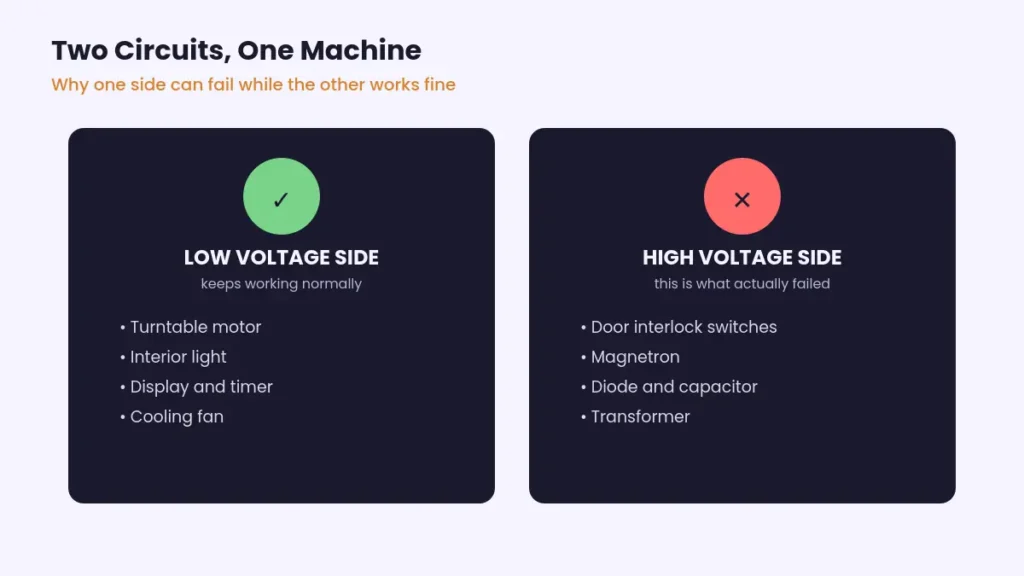
It helps to picture a microwave as two machines sharing a single box. The low voltage side runs the turntable motor, the interior light, the display, and the cooling fan. The high voltage side is a completely different animal, stepping household current up to roughly 2,000 to 3,000 volts to power the magnetron, the tube that actually produces the microwaves that heat your food. These two sides share a power source and a control board, but a failure on the high voltage side has zero effect on whether the turntable spins, the light comes on, or the timer counts down normally. That’s exactly why this particular complaint, everything seems fine except the heat, is one of the most common calls a microwave technician gets.
The Most Common Cause: Worn or Misaligned Door Switches
Every microwave has at least two, usually three, small switches built into the door frame. Their entire job is safety: they confirm the door is fully closed before allowing the high voltage circuit to activate, and they cut power instantly the moment the door opens even a crack. After years of daily opening and closing, these switches wear out, get knocked out of alignment, or accumulate enough grease and grime that they stop making solid contact.
Here’s the part that trips people up. A worn switch doesn’t always stop the microwave from running altogether. Depending on which specific switch has failed and how, the unit can still power on, the light still comes on, the turntable still spins, but the control board never gets the signal it needs to fire up the magnetron. Replacing a set of door switches typically runs $90 to $160 including labor, and it’s the first thing most technicians check because it’s the cheapest possible explanation and, frankly, the most likely one.
Failed Magnetron: The Part That Actually Makes the Heat
If the door switches check out fine, the magnetron itself is the next suspect, and honestly the most common cause overall once you count it separately from the switches. The magnetron is a sealed tube that converts electrical energy into the microwave radiation that heats your food. Like any component that runs hot for years, it eventually wears out, usually announcing itself with a gradual decline in heating power before quitting entirely, though some just stop cold with no warning at all.
A magnetron replacement is one of the pricier microwave repairs, generally $150 to $250 for a countertop unit and somewhat more for a built in or over the range model where labor takes longer. On an older microwave, this is often the point where a technician will be upfront with you about whether repairing makes sense versus just replacing the unit, since a basic new countertop microwave doesn’t cost dramatically more than this one repair.
High Voltage Diode and Capacitor Problems
Two smaller components sit between the transformer and the magnetron, and either one failing produces the exact same symptom: normal operation, zero heat. The high voltage diode converts the stepped up AC power into the pulsing DC current the magnetron actually needs. When a diode fails, and they do fail with some regularity, that conversion simply stops happening.
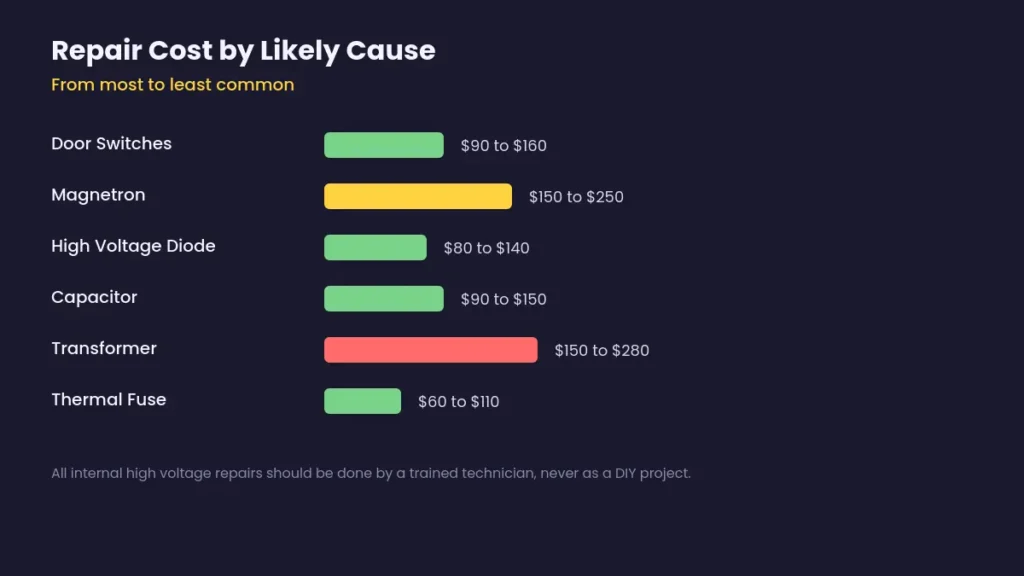
The high voltage capacitor works alongside the diode, storing and releasing charge to help drive the magnetron. A weak or shorted capacitor produces the same dead heat symptom. Diode replacement usually costs $80 to $140, while capacitor replacement runs about $90 to $150. Diagnosing which of the two has failed requires testing with the unit unplugged and fully discharged, using specific tools and a known procedure, which is a big part of why this isn’t a weekend project for most homeowners.
Less Common Culprits: Transformer and Thermal Fuse
The high voltage transformer itself can fail, though it’s built to be one of the more durable parts in the machine and usually outlasts everything else. When it does go, it’s often accompanied by a distinct humming or buzzing sound, sometimes a burning smell, and transformer replacement tends to run $150 to $280 given the labor involved in accessing it.
A blown thermal fuse is worth mentioning too, though it more commonly causes the entire microwave to stop working rather than just the heat. On some models it can selectively cut the high voltage circuit while leaving the low voltage side untouched, producing the same turntable spins, nothing heats pattern. Thermal fuse replacement is one of the cheaper fixes on this list, typically $60 to $110.
We see this complaint across the whole state, but it shows up with some regularity in kitchens around Rochester Hills and Warren, often on built in or over the range units installed during a kitchen remodel five to eight years back, right around when door switches and magnetrons on that generation of microwaves tend to start wearing out.
Why This One Is Not a DIY Project
It’s worth repeating because it matters: microwave capacitors store genuinely dangerous voltage that doesn’t disappear the moment you unplug the unit. Technicians are trained to discharge that capacitor safely before touching anything else inside the case, using a specific tool and procedure. This isn’t the same caution level as replacing a dryer belt or clearing a washer’s drain filter. If you’re tempted to open the case yourself to poke around, this is the one appliance repair on this entire site where the answer is simply don’t.
What You Can Safely Check First
- Confirm the door is closing fully and latching, without food debris blocking it
- Listen closely for 10 to 15 seconds, a healthy magnetron produces a low hum you can usually hear
- Try a different outlet to rule out a weak or partially tripped circuit
- Check whether the interior light and display both work normally
- Note whether heating stopped suddenly or gradually got weaker over recent weeks
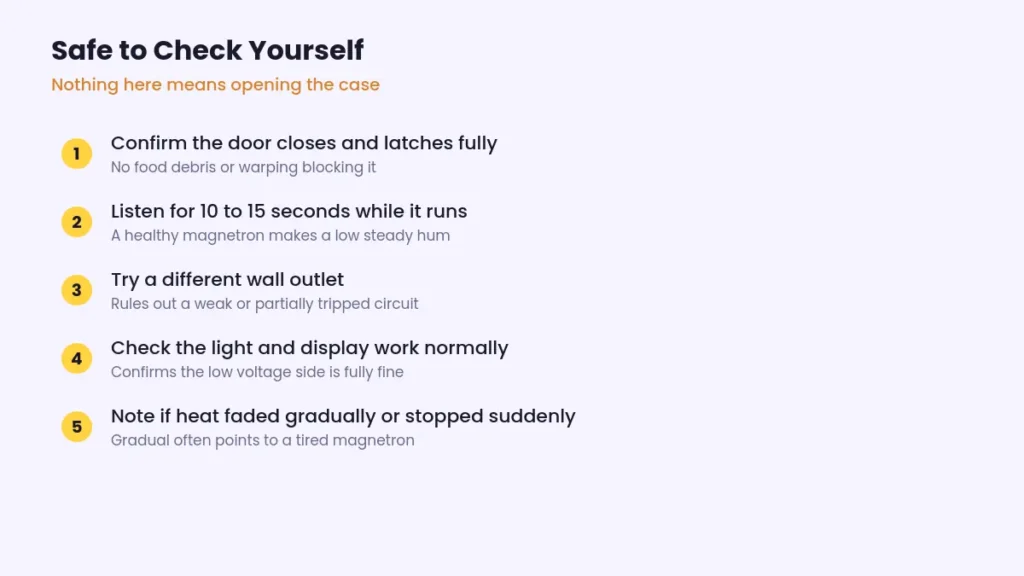
None of these checks require opening the case, and together they take about two minutes. What they mainly do is give your technician useful information up front, which often speeds up the diagnosis considerably once they arrive.
Repair or Replace: A Quick Reality Check
Countertop microwaves are inexpensive enough that repair math looks different here than it does for a refrigerator or a washer. A door switch or thermal fuse repair, both under $150, is almost always worth doing on any microwave under six or seven years old. A magnetron or transformer replacement, both pushing toward $250, is where it’s worth pausing, especially on a countertop model that’s already eight or more years old, since a comparable new unit often isn’t far off in price. Built in and over the range microwaves are a different story, since replacement involves cabinetry work, and repairing tends to make more financial sense across a wider range of ages.
Frequently Asked Questions About a Microwave That Spins but Does Not Heat
Why does my microwave turntable spin but the food does not get hot?
This means the low voltage side of the microwave, which runs the turntable, light, and display, is working fine, while something on the separate high voltage side that actually generates heat has failed. The most common causes are worn door switches or a failed magnetron.
Can I fix a microwave that is not heating myself?
Checking that the door closes fully and testing a different outlet are safe to do yourself. Anything involving the inside of the case should be left to a trained technician, since the high voltage capacitor can hold a dangerous charge even after the microwave is unplugged.
Is it worth repairing a microwave or should I just buy a new one?
For a door switch or thermal fuse issue, repairing almost always makes sense since those fixes cost well under $150. For a magnetron or transformer failure on an older countertop microwave, replacing the unit is often the more practical choice, while built in models are usually worth repairing regardless of age.
How do I know if my microwave’s magnetron is failing?
A failing magnetron often shows a gradual decline, food taking noticeably longer to heat over a period of weeks, before it stops producing heat entirely. Some magnetrons do fail suddenly with no warning at all.
Is it dangerous to keep using a microwave that will not heat?
There is no danger in the microwave simply not heating, since that means the high voltage circuit is not active. The bigger risk is opening the case to investigate yourself, since internal components can hold a lethal electrical charge that has nothing to do with whether the unit is plugged in.
Get a Safe, Accurate Diagnosis
A microwave that spins but won’t heat has a handful of possible causes, and because of the safety issues involved, this is one repair where guessing or opening the case yourself genuinely isn’t worth the risk. A technician can identify the exact cause and give you a straight answer on repair versus replacement within a single visit.
Motor City Appliance Pros handles this exact issue across Michigan every week, with same day appointments and a 90 day warranty on every repair. If your dryer or microwave needs attention as well, our technicians can usually take care of everything during the same visit.