
Why your dryer spins normally but never gets warm almost always comes down to one broken link in the heating chain, not the whole machine failing at once. The drum, belt, and motor are a separate system from the parts that actually generate heat, so a dryer can tumble clothes for a full cycle while producing zero warmth. On electric dryers, the most common cause is a burned out heating element or a blown thermal fuse. On gas dryers, a failed igniter or a bad gas valve coil is usually the culprit. This guide walks through each cause in the order a technician actually checks them, along with a few things you can look at yourself first.
The good news is that almost every cause on this list is a affordable, single visit repair rather than a sign the dryer needs replacing, even on units eight or nine years old. The trick is narrowing down which part failed, since the fix and the cost are different for each one. Think of it less like the dryer breaking and more like one specific link in a chain giving out while everything else keeps running normally.
Electric or Gas? Why It Changes the Diagnosis
Before anything else, confirm which type of dryer you have, since the two use completely different heat sources and fail in different ways. Electric dryers heat using a coiled metal element, similar to a large toaster coil, that a technician can test with a simple continuity check. Gas dryers use a small flame lit by an igniter, with heat regulated by a gas valve, which involves a different set of parts entirely. Knowing which type you have before calling for service helps a technician arrive with the right parts already on the truck.
It helps to picture a dryer as two systems bolted together. One system, the drum, belt, motor, and timer, handles moving and tumbling the clothes. The other, entirely separate system generates the heat. Because these are independent, a failure in the heat system leaves the motion system completely unaffected, which is exactly why the drum keeps turning like normal while the inside of the dryer stays cool to the touch.
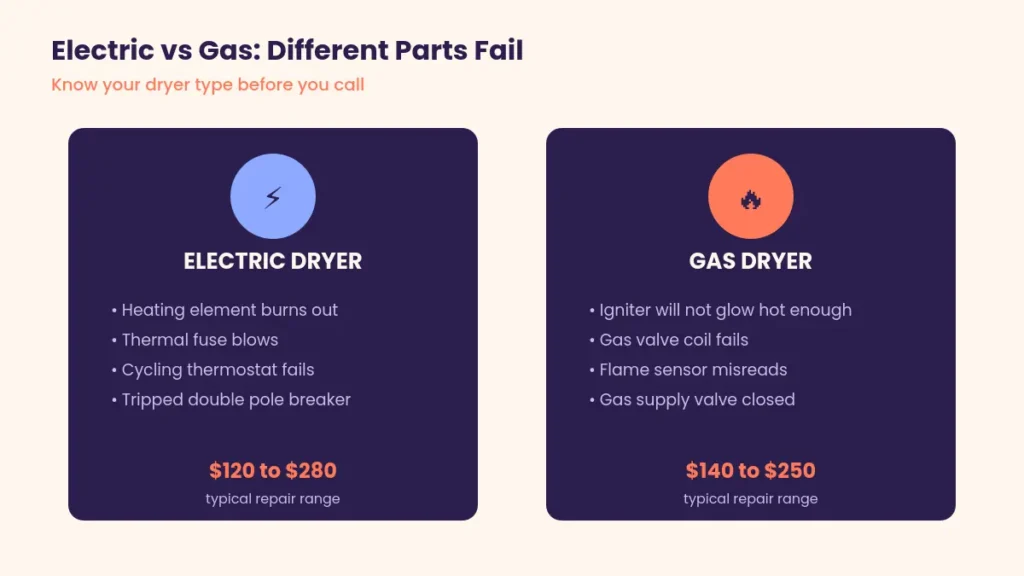
Electric and gas dryers fail differently, know your type before you call
The Most Common Cause on Electric Dryers: A Burned Out Heating Element
The heating element is a coiled wire that glows and heats as electricity passes through it, similar to the element in an oven. Over time, these coils weaken and eventually snap, much like a light bulb filament burning out. When this happens, the dryer keeps running exactly as before, the drum still turns and the timer still counts down, but no heat reaches the clothes at all.
A burned out element is usually diagnosed with a simple multimeter test, and replacement typically costs $150 to $280 including labor. This is the single most common reason an electric dryer runs without heating, accounting for a large share of this specific service call.
Blown Thermal Fuse: The Safety Cutoff That Trips Silently
Every dryer has a thermal fuse, a small safety device that permanently cuts power to the heating circuit if the dryer overheats, usually because of restricted airflow. Unlike a fuse you can reset, a blown thermal fuse must be replaced, and it often blows silently with no warning light or error code, just a dryer that suddenly stops heating.
Replacing a thermal fuse is one of the more affordable repairs on this list, generally $120 to $200 including labor. The important part is that a blown fuse is frequently a symptom of a separate airflow problem, usually a clogged vent, so a good technician checks the vent path at the same time or the new fuse can blow again within weeks.
Cycling Thermostat or High Limit Thermostat Issues
Dryers use one or more thermostats to regulate temperature during the cycle and to shut off heat if things run too hot. When a cycling thermostat fails, it can either stop signaling the heating element entirely or cause inconsistent heat that feels like no heat at all on shorter cycles. This is a less common cause than a bad element or fuse but still shows up regularly, particularly on dryers eight to twelve years old.
Thermostat replacement typically runs $130 to $230. Because symptoms overlap closely with both a bad element and a blown fuse, this is one of the trickier calls to diagnose without hands on testing.
Gas Dryer Specific Causes: Igniter and Gas Valve Coils
On gas dryers, a failed igniter is the single most common reason for a no heat complaint. The igniter glows to light the gas burner, and like the electric heating element, it weakens with age and eventually stops glowing hot enough to ignite the gas. A failed igniter is often noticeable as a faint clicking or a burner that seems to almost light but does not catch.
Gas valve coils are the second most common gas specific cause. These small electrical coils open the valve that releases gas to the burner, and when one fails, gas never reaches the igniter even if the igniter itself works perfectly. Igniter replacement generally costs $150 to $250, while gas valve coil replacement runs $140 to $240.
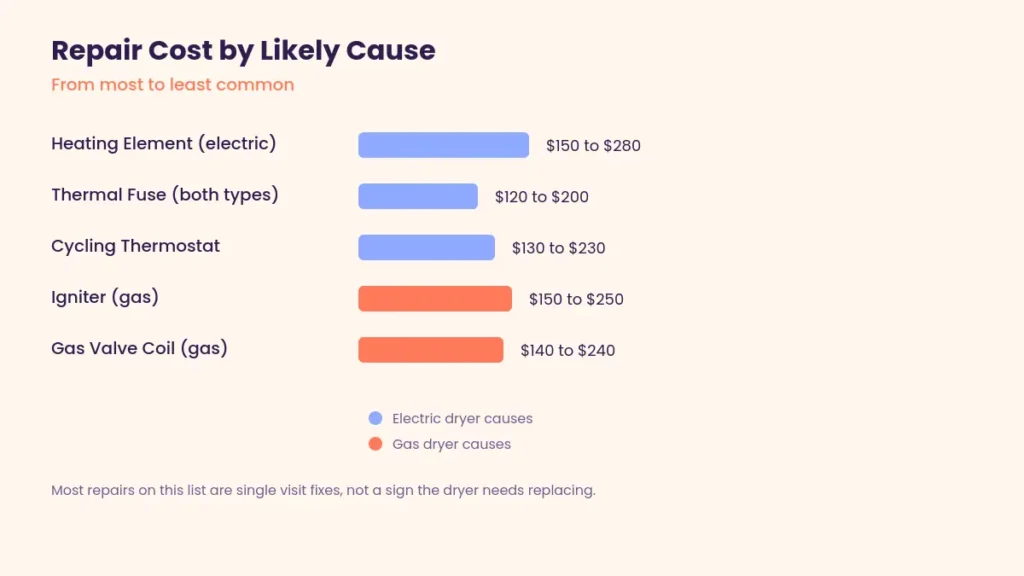
Typical repair cost ranges by cause for electric and gas dryers
Could the Problem Actually Be the Vent, Not the Dryer
A dryer that runs for a very long time and still feels only slightly warm, rather than completely cold, often points to a restricted vent rather than a failed part inside the machine. When exhaust air cannot escape efficiently, heat gets trapped and the dryer’s safety systems throttle back the heating element to prevent overheating, which can feel like a weak heat problem even though every internal part is functioning correctly.
This distinction matters because a vent cleaning costs far less than a part replacement, and a technician should always check airflow before recommending a repair. If your dryer has never had its full vent line professionally cleaned, especially in an older home with a long or bent duct run, this is worth mentioning when you call.
A simple way to tell the two apart before calling anyone: hold your hand near the exhaust vent outside your house while the dryer runs. Strong, warm airflow points toward an internal component issue if the dryer itself feels cool. Weak or barely noticeable airflow, even if the dryer interior feels somewhat warm, points toward a blocked vent trapping the heat inside rather than a failed part.
What to Check Yourself Before Calling a Technician
- Confirm the dryer is actually set to a heat cycle and not an air fluff or no heat setting
- Check that the circuit breaker for the dryer has not partially tripped
- For gas dryers, confirm the gas supply valve behind the unit is fully open
- Clean the lint trap completely, since a packed trap restricts airflow significantly
- Note whether heat stopped suddenly or gradually got weaker over several loads
None of these checks require tools or moving the dryer, and together they take less than five minutes. If everything checks out and the dryer still runs without heat, the cause is almost certainly one of the internal components covered above.

Five minute self check before calling a technician
Why This Shows Up More Often in Michigan Homes
Michigan’s cold winters push dryers harder than most homeowners realize, since incoming air is colder and the appliance has to work longer to reach the same drying temperature, adding extra cycles onto components that are already wearing down. Homes with dryers vented through long basement or crawl space runs, common in older housing stock around Macomb and Romulus, tend to see vent related airflow issues more often than homes with a short, straight exterior vent run. If your dryer sits in a basement or utility room with a long vent path, mention that detail when describing the issue.
Frequently Asked Questions About a Dryer That Runs but Does Not Heat
Why does my dryer spin but not produce heat?
This almost always means the drum, belt, and motor are working normally while a separate heating component has failed. On electric dryers, the most common causes are a burned out heating element or a blown thermal fuse. On gas dryers, a failed igniter or a bad gas valve coil is the usual cause.
Can I fix a dryer that is not heating myself?
Some causes, like a tripped breaker or a closed gas valve, take thirty seconds to check and fix yourself. Diagnosing and replacing a heating element, thermal fuse, thermostat, or igniter involves working inside the appliance safely and is best left to a technician, especially on gas units where a wiring or gas connection mistake creates real safety risk.
Is a dryer that will not heat expensive to repair?
Most causes fall between $120 and $280 including parts and labor, making this one of the more affordable common appliance repairs. The exception is when multiple components have failed at once, which is more likely on dryers past the twelve year mark.
How do I know if the problem is my dryer or my vent?
If the dryer produces some heat but takes unusually long to dry a load, the vent is the more likely culprit. If there is no heat at all from the very start of the cycle, the issue is almost always an internal component like the heating element, thermal fuse, or igniter rather than the vent.
Should I keep using my dryer if it is not heating?
It is safe to run a few more loads while you wait for a repair, though clothes will come out damp and need extra drying time elsewhere. If you smell gas near a gas dryer at any point, stop using it immediately and call for service, since that points to a gas leak rather than a simple igniter failure.
Get a Same Day Diagnosis Instead of Guessing
A dryer that runs without heating has several possible causes, and while the checklist above can narrow things down, an accurate diagnosis still comes down to a technician testing the actual components inside your unit. Guessing wrong means paying for a part that was never the problem.
Motor City Appliance Pros diagnoses and repairs this exact issue across Michigan every week, with same day appointments and a 90 day warranty on every repair. If your washing machine or refrigerator is acting up at the same time, our technicians can often take care of everything in a single visit.