
Why a dishwasher can run its entire cycle, heat up, make all the right noises, and still hand you plates with dried food stuck to them almost always comes down to water not actually reaching every surface, not the machine forgetting how to clean. A modern dishwasher doesn’t scrub anything, it just blasts hot water at high pressure and lets detergent do the chemical work. Block that spray pattern even slightly, whether with a clogged arm, a dirty filter, or dishes loaded the wrong way, and you get exactly what you’re describing: a full cycle that accomplished almost nothing. Less often, the real issue is water that isn’t reaching the temperature detergent needs to actually work, or a filter so packed with old food that it’s just recirculating dirty water over everything.
The good news here is that most of these causes cost nothing to fix and don’t need a technician at all. This is one of the few dishwasher complaints where checking things yourself first is genuinely worth fifteen minutes before assuming anything’s actually broken.
Start With the Obvious: Loading and Blockage
Before getting into parts and mechanics, it’s worth ruling out the simplest explanation. Oversized pots, large plates, or a stray utensil can physically block a spray arm from spinning freely, which stops water from reaching an entire section of the rack no matter how well everything else in the machine is working. Dishes nested too closely together, or a bowl accidentally flipped face down over another item, can create dead zones where water simply never lands. This sounds almost too simple to be the answer, but it’s genuinely one of the most common reasons for this exact complaint, especially right after buying a new set of larger dinnerware that doesn’t fit the rack quite like the old one did.
Clogged Spray Arms: The Most Common Real Cause
Spray arms have a row of small holes designed to shoot water at a specific angle as they spin. Food particles, bits of label glue, and mineral deposits work their way into these holes over months of use and gradually restrict or fully block individual jets. When enough holes clog, the spray pattern becomes lopsided or dramatically weaker, and certain areas of the rack stop getting hit with meaningful water pressure at all.
You can usually spot this yourself. Pull out the lower rack, remove the spray arm, which typically just lifts or unscrews off its post, and hold it up to a light. Clogged holes are visible as dark spots where light doesn’t pass through. A toothpick or a thin wire works well to clear them out, and running the arm under a strong stream of water afterward flushes out anything loosened. This costs nothing and takes about ten minutes, making it the very first thing worth trying.
A Dirty Filter Undoes Everything Else
Most dishwashers made in the last decade or so use a manual filter system instead of the old style garbage disposal grinder that used to shred food automatically. That filter, usually a removable cylinder or mesh screen sitting at the bottom of the tub, catches food particles so they don’t recirculate. If nobody’s ever pulled it out and rinsed it, and a lot of people genuinely don’t know it needs that, it eventually clogs to the point where water can’t drain and refill properly between rinse stages.
A severely clogged filter often announces itself with a faint odor when you open the door, or visible debris sitting at the bottom of the tub. Cleaning it is usually as simple as twisting it a quarter turn, lifting it out, and rinsing under the sink, something worth doing every few weeks depending on how often the dishwasher runs and how much food debris typically goes in unrinsed.
Hard Water Film Versus Actual Dirt
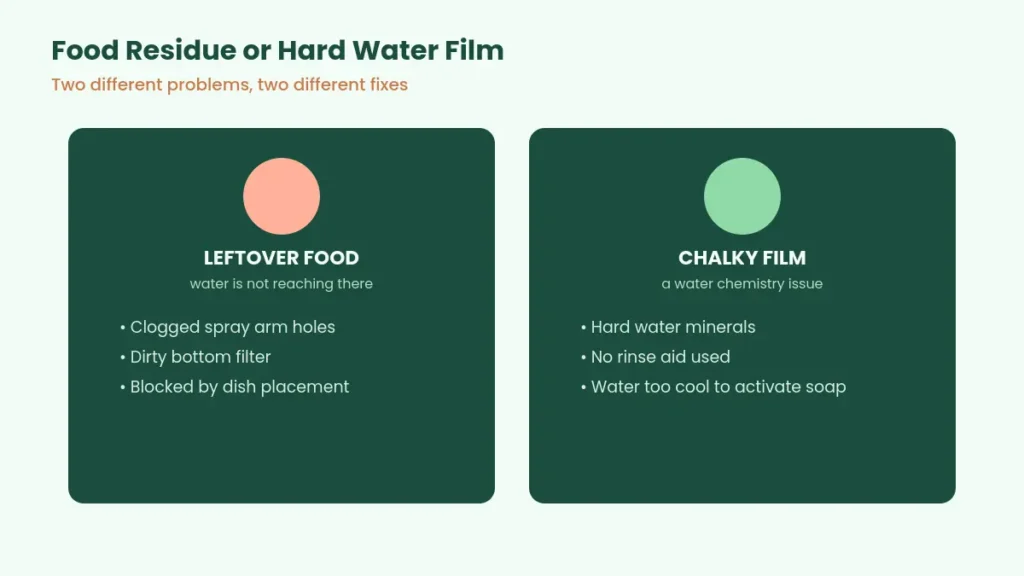
It’s worth telling these two apart, since they point to completely different fixes. Actual leftover food, dried sauce, stuck on grease, means water isn’t physically reaching that area, pointing back to spray arms or a clogged filter. A hazy, chalky film across everything, glasses that look cloudy even when technically clean, points toward hard water mineral deposits instead, which is a water chemistry issue rather than a mechanical one.
Running a cycle with a cup of white vinegar placed upright on the top rack, no other dishes, helps distinguish the two. If everything comes out noticeably clearer afterward, hard water buildup was likely the real culprit, and a rinse aid or dishwasher cleaner used regularly going forward will help keep it from coming back.
Water Not Reaching the Temperature Detergent Needs

Dishwasher detergent is formulated to activate properly around 120 degrees Fahrenheit. Below that, it simply doesn’t dissolve grease and food residue the way it’s supposed to, no matter how strong the spray pressure is. This can happen because a home’s water heater is set too low, because hot water hasn’t had time to travel through long pipes to the kitchen before the cycle starts, or because the dishwasher’s own internal heating element has started to fail.
Running the kitchen sink tap until it turns hot right before starting the dishwasher solves the pipe travel issue for anyone dealing with a longer distance from the water heater. If dishes are still coming out dirty after that simple fix, and especially if the dishwasher never seems to feel properly hot inside mid cycle, a failing heating element is worth having checked, since that’s a $130 to $220 repair rather than a settings adjustment.
Detergent Problems Worth Ruling Out
Detergent pods sitting in a humid dispenser can partially dissolve or clump before the cycle even starts, which means less active cleaning agent actually gets released at the right moment. Old detergent that’s been sitting in a damp cabinet for a year loses effectiveness the same way. Using a gel or liquid formula when a home has notably hard water can also underperform compared to a pod or powder with built in water softening agents. None of this is an appliance problem at all, but it produces the exact same symptom and is worth ruling out simply by switching to a fresh box of pods for a cycle or two.
Less Common Causes: Inlet Valve and Circulation Pump
If the dishwasher isn’t filling with enough water in the first place, everything downstream suffers, regardless of how clean the spray arms and filter are. A failing water inlet valve restricts how much water enters per cycle, typically a $110 to $190 repair. The circulation pump, which is what actually builds the pressure behind each spray, can also weaken with age, producing a noticeably softer spray pattern across the entire load rather than isolated dead zones. Pump repairs run higher, generally $180 to $300, and are less common than the causes above, usually showing up on units past eight or nine years old.
What You Can Check Yourself First
- Pull and inspect both spray arms for visible clogs, holding them up to light
- Remove and rinse the bottom filter, checking for trapped debris
- Run the kitchen faucet hot before starting a cycle
- Confirm nothing large is blocking either spray arm from spinning freely
- Try a fresh box of detergent for a cycle to rule out a product issue

These five checks cover the overwhelming majority of cases and take well under half an hour combined. If dishes are still coming out dirty after working through this list, that’s a good sign something mechanical, the heating element, inlet valve, or pump, actually needs a technician’s attention.
Why Michigan’s Hard Water Makes This More Common
A large share of Michigan households deal with moderately hard water, and that mineral content accelerates exactly the kind of buildup that clogs spray arm holes and leaves that chalky film on glassware. Homes around Taylor and Macomb in particular tend to see this show up faster than in areas with softer municipal water, which is part of why a monthly dishwasher cleaner cycle, not just detergent, makes a bigger practical difference here than it might in a region with naturally soft water.
Frequently Asked Questions About a Dishwasher Not Cleaning Properly
Why does my dishwasher leave a white film on glasses?
A white, chalky film is almost always hard water mineral deposits rather than leftover food or a cleaning failure. Using a rinse aid regularly, and running an occasional dishwasher cleaner cycle, typically resolves it without needing any repair.
Why are dishes still dirty even though the dishwasher runs a full cycle?
This usually means water isn’t physically reaching every surface, most often because of clogged spray arm holes or a filter packed with trapped food debris. Both are things you can check and clean yourself in under fifteen minutes.
How often should I clean my dishwasher’s filter?
Most manufacturers recommend rinsing the filter every few weeks under normal use, though households that don’t pre rinse dishes before loading may need to do it more often. A faint odor when opening the door is a common sign it’s overdue.
Could my water heater be the reason dishes aren’t getting clean?
Yes. Dishwasher detergent needs water around 120 degrees to work properly, and a water heater set too low, or a long pipe run to the kitchen, can leave water too cool to activate it fully. Running the sink tap hot before starting a cycle is a simple way to test this.
Is it worth repairing a dishwasher that isn’t cleaning well, or should I replace it?
Nearly all the causes covered here are inexpensive fixes well under $300, so repair almost always makes more sense than replacement, especially since the underlying tub, racks, and door seals typically outlast these individual components by years.
Get a Real Diagnosis Instead of Guessing
If you’ve worked through the checks above and dishes are still coming out dirty, the remaining causes genuinely need a technician’s eyes on the actual components inside the machine. Guessing at a part replacement means potentially paying for something that was never the actual problem.
Motor City Appliance Pros repairs dishwashers across Michigan every week, with same day appointments and a 90 day warranty on every repair. If your refrigerator needs attention at the same time, our technicians can often take care of both during a single visit.